As this soft robot does not require multiple actuators to control its movement, it may also be suitable for tasks that are far more demanding and in hard-to-reach locations.

An inchworm provided the inspiration for a robot that can move without any rigid parts. The robot mimics a flexing muscle and can be used to inspect sewer pipes or as an explorer on the planet Mars, according to a thesis from the University of Gothenburg.
Soft robotics is a field of research that uses soft materials to mimic properties found in nature, such as those of a worm or a muscle. This can overcome the limitations of traditional robots. One method involves alternating layers of carbon electrodes with a polymer material. When a weak voltage is applied to the carbon surfaces, the polymer expands, much like a flexing muscle.
“I fabricated a five-layer of polymer-carbon configuration to create an artificial muscle about as thick as a strand of hair. Inspired by the locomotion of an inchworm, I formed a cylindrical artificial muscle by rolling the five-layer sheet that could mimic the inchworm’s movements when it was given rhythmic voltage,” explained Hari Prakash Thanabalan, a former Ph.D. student, that now is working as a researcher at the University of Gothenburg.
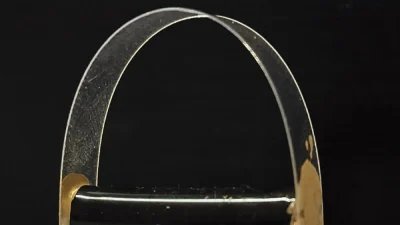
The roll alternated between getting longer and shorter. By gluing a flexible plastic arch between the ends of the artificial muscle, it was able to move forwards on a ribbed surface where it could get a grip.
“It expanded by about 10 per cent when I switched on the power and returned to its original size when I switched it off. I tested different angles on the surface’s grooves and the robot moved perpendicular to the grooves every time. In the future, we could develop a robotic crawler tailored to the surface on which it is to be used. Fit a camera to the crawler and it can be used to inspect pipelines autonomously,” said Thanabalan.
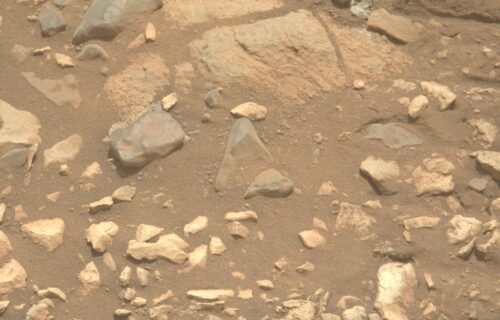
As this soft robot does not require multiple actuators to control its movement, it may also be suitable for tasks that are far more demanding and take place in locations much further away than a sewer pipe. The planet Mars, for example.
“The robot’s motor has no moving parts, and I ran my prototype for four hours a day over a period of more than four months without losing performance,” said Thanabalan.
The worm was protected with a carbon nanotube to make it resistant to external damage. In experimental tests, needles were inserted straight through the robot and the robotic worm continued to crawl nonetheless, as the carbon nanotubes bypass the damaged areas keeping the rest of the undamaged areas intact. The robot is also believed to be able to withstand the cosmic radiation on the planet Mars.
“Although further development is needed, I believe this robotic worm has paved way for nature-inspired soft robots that can operate in challenging environments and maybe one day we could worm our way to Mars,” added Thanabalan.
For more information, contact Hari Prakash Thanabalan at