
Hey folks! Today, we were actually planning to write about the new Closing Auction Session (CAS), the mechanism used to determine stock closing prices, that’s believed to have caused the sharp rise in the NIFTY index on Monday. But then we realised we’d already explained this in detail over a year ago. So, if you’ve been wondering what all the fuss is about or how this new mechanism works, you can check out our story here.
Instead, we stumbled upon something far more interesting. A company called Ardee Industries is opening its IPO subscription today (it’ll remain open until August 7th). And it’s not your typical manufacturing business. So, in today’s Finshots, we’re taking a closer look at it.
The Story
Lead is a fascinating metal.
Unlike most metals, it can be melted, recycled and reused over and over again without losing its properties. That’s precisely why over 80% of India’s lead doesn’t come from mines but from scrap. Instead of digging up fresh lead ore, India largely depends on companies that recover lead from old batteries.
And one such company is Ardee Industries, the protagonist of today’s story.
As India electrifies more of everything with electric vehicles, solar rooftops, telecom towers and backup power systems, the demand for lead-acid batteries, and the recycled lead that goes into making them, keeps climbing.
Ardee sits right at the centre of this loop.
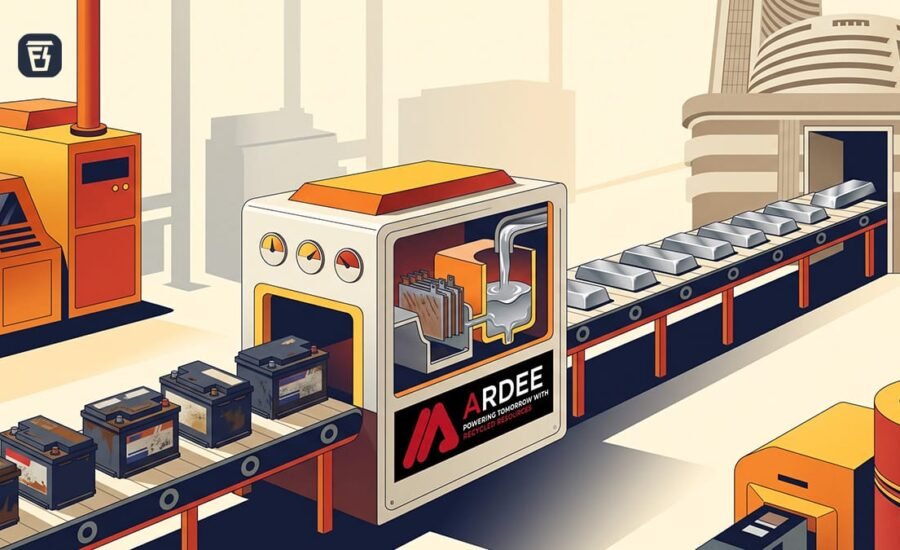
It buys used batteries and other lead-bearing waste, melts them down in giant rotary furnaces, purifies the metal, and then customises it depending on what customers need.
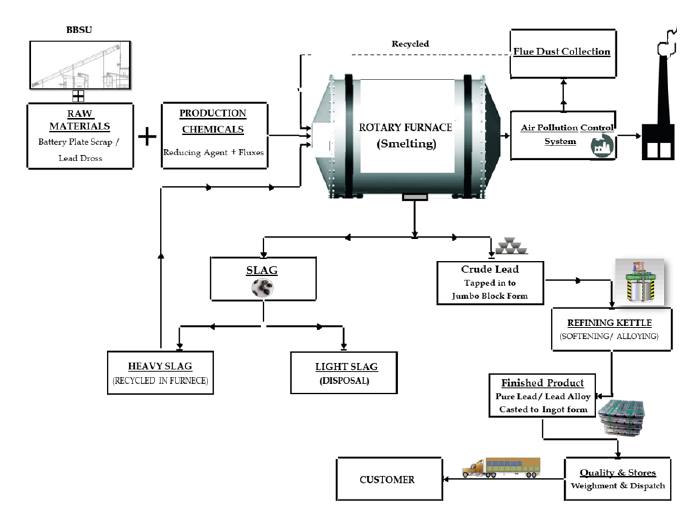
For instance, add a little calcium, and you get an alloy that helps batteries last longer with less maintenance. Mix in antimony, and you get tougher battery grids and castings. Throw in some tin, and you get lead that’s ideal for soldering electronics.
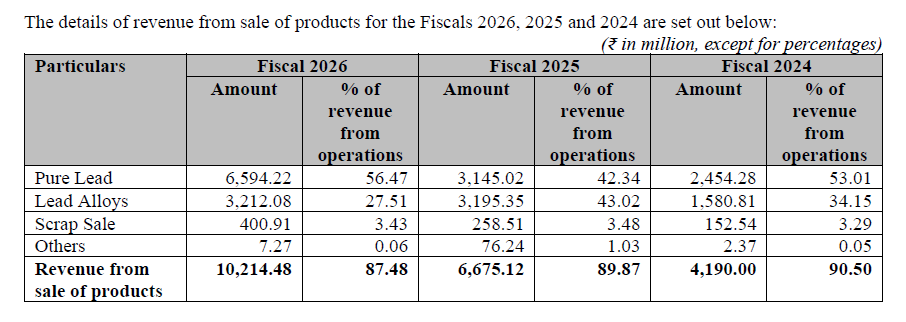
In other words, one raw material can wear five different hats. And that’s reflected in Ardee’s revenue mix, where the biggest chunk comes from selling pure lead, close to a third comes from lead alloys, and the rest from scrap sales and other related products.
The business itself is fairly straightforward. Ardee buys scrap, refines it, and sells the finished product for more than it paid.
It sources battery scrap and lead blocks from both domestic and overseas suppliers. It then sells the refined lead to battery manufacturers like Amara Raja, cable manufacturers, and international traders, with prices largely tracking the London Metal Exchange (LME).
And this simple business model has produced some incredible looking numbers. Revenue has climbed to ₹1,167 crore this year, translating into a staggering 59% CAGR over the last couple of years. Net profits grew even faster, from roughly ₹9 crore to ₹85 crore between FY24 and FY26 or a CAGR of over 207%. EBITDA margins (operating profit margins) also more than doubled, rising from about 6% to nearly 13%.
Now, you’re probably wondering how sales and profits exploded so quickly.
Well, the biggest reason seems to be that Ardee almost doubled its production capacity from 54,750 MTPA (Metric Tons Per Annum) to 104,025 MTPA between FY24 and FY25. And once those furnaces and pollution-control equipment are already in place, every additional tonne costs relatively less to produce because a large part of the expenses are fixed.
At the same time, import approvals for lead scrap, which are notoriously difficult to obtain in India, started coming through more smoothly. That meant Ardee could keep its furnaces running consistently instead of operating below capacity.
Then there’s exports. The company expanded from serving four countries to eight. As a result, exports as a share of revenue jumped from 17% in FY24 to nearly 40% in FY26.
On top of that, its gross margin per tonne improved by almost 30%. For the uninitiated, gross margin per tonne is simply the difference between what Ardee sells its refined lead or alloys for and what it spends on raw materials and direct processing.
Put all of this together, and that dramatic growth suddenly starts making a lot more sense.
And now, to fund its next phase of growth, Ardee is rolling out a ₹425 crore IPO, of which ₹320 crore is a fresh issue. The company plans to use most of this money for two things: funding working capital and repaying around ₹20 crore of debt.
But understanding whether this IPO is as interesting as the business itself requires looking at both its strengths and its weaknesses.
For starters, apart from those impressive financial numbers, Ardee has a few advantages that distinguish it from a typical scrap recycler.
Its brand is listed on India’s MCX (Multi Commodity Exchange) and, more unusually, its refined lead is registered on the LME. That’s a credibility stamp very few Indian recyclers have.
Its plant in Tirupati, Andhra Pradesh, is also strategically located close to major battery manufacturers like Amara Raja Energy and Mobility, while also being near three ports. That allows Ardee to deliver products faster and spend less on transportation, giving it a meaningful cost advantage.
There’s another advantage too. The barriers to entry are fairly high in this business because environmental approvals for importing lead scrap are genuinely difficult to obtain. That keeps many informal and unregulated players out while rewarding companies like Ardee that have maintained a clean compliance record.
Even the valuation doesn’t seem too demanding. The company is valued at around ₹1,690 crore, translating to roughly 15-17 times its earnings per share (EPS) of about ₹3. That’s considerably lower than listed peers such as Gravita, Pondy Oxides and Chemicals, and Jain Resource Recycling.
Then again, those companies are also much larger businesses with significantly higher revenues and profits. And Ardee’s smaller scale, single-factory footprint and customer concentration could very well justify some of that valuation discount.
Which brings us to the risks. Historically, the company’s debt-to-equity ratio (a measure of how much a company relies on borrowed money versus its own funds) has been fairly high, hovering between 2x and 4x during FY24 and FY25, before falling to around 1.25x in FY26.
The promoters’ stake will also come down from 91% to about 67% after the IPO.
And perhaps the biggest concern is customer concentration. Despite having over 50 customers, its top ten customers account for nearly 90% of its revenue.
So yeah, Ardee operates in one of the most interesting corners of India’s circular economy and has delivered remarkable growth over the last few years.
But it’s still a relatively small company that’s only beginning its journey. Whether its growth can continue compounding at this pace is something only time, and a few more years of financial statements, will tell.
Until then…
If you liked this story, feel free to share it with your friends, family or even strangers on WhatsApp, LinkedIn, and X.
Also, if you’re someone who loves keeping tabs on the world of business and finance, hit subscribe if you haven’t already. And if you’re already a subscriber, thank you! Maybe forward this to someone who’d enjoy our stories but hasn’t discovered us yet.
Trust Finshots for Finance? You’ll love Ditto for insurance.
Built by the same four friends behind Finshots, Ditto is here to make insurance simple. No spam, only honest advice to help people make smart insurance decisions.
✅Backed by Zerodha
✅Rated 4.9 on Google (31,000+ reviews)
✅Over 7 lakh customers advised