
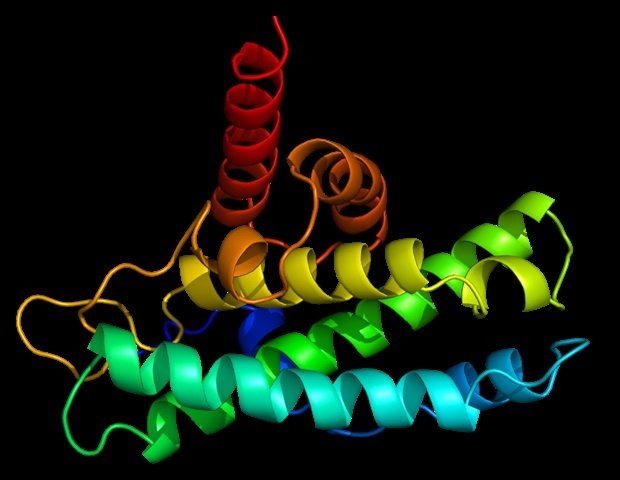
Sino Biological Inc. is pleased to announce the launch of its Recombinant Human p-Tau217 Protein (Cat. No. T08-50SN), a full-length, tag-free Tau reagent developed to support Alzheimer’s disease biomarker assay development, antibody evaluation, and Tau biology research. This release expands on Sino Biological’s comprehensive Tau protein product portfolio, designed to accelerate neurodegenerative disease research.
Meeting the growing need for p-Tau217 assays
Phosphorylated Tau at threonine 217 (p-Tau217) has emerged as a leading biomarker associated with amyloid pathology and Alzheimer’s disease. As plasma and cerebrospinal fluid (CSF) p-Tau217 testing continues to advance, the development of next-generation Alzheimer’s biomarker assays is driving demand for well-characterized research materials that can support assay optimization, analytical validation, and antibody specificity testing.
Precisely defined Thr217 phosphorylation
Following a proprietary enzymatic process, the p-Tau217 protein is selectively phosphorylated at Thr217, while the clinically relevant Thr181 and Thr231 sites remain unphosphorylated. Mass spectrometry confirms that Thr217 is the predominant phosphorylation site, achieving greater than 75% phosphorylation with no detectable activity at Thr181 or Thr231. Independent western blot analysis provides orthogonal verification of this site-selective phosphorylation profile.
As blood-based p-Tau217 testing gains momentum in Alzheimer’s biomarker research, assay developers need research reagents with clearly defined phosphorylation profiles. Our full-length human Tau protein is selectively phosphorylated at Thr217 and characterized using orthogonal methods, giving researchers greater confidence in assay development and antibody specificity studies.”
Dr. Rob Burgess, Chief Business Officer, Sino Biological US Inc.
Broad applications in Alzheimer’s Biomarker assay development and Tau research
With its full-length, tag-free format and precisely defined phosphorylation profile, the p-Tau217 protein supports a wide range of applications, including plasma- and CSF-based Alzheimer’s biomarker assay development, antibody screening and specificity validation, assay control optimization, and mechanistic studies on Tau phosphorylation and biology.