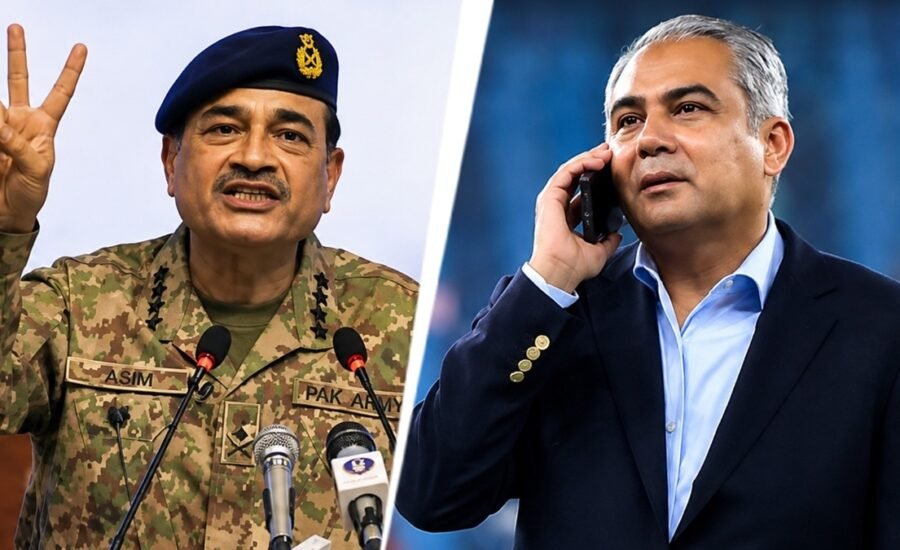
The cracks within Pakistan’s power structure are now becoming harder to ignore. Days after his shocking assertion that Pakistan’s governance system had “collapsed”, interior minister Mohsin Naqvi dropped another bombshell. Claiming to have unearthed the “biggest scam” in Pakistan’s history, Naqvi said multiple pillars of the state machinery, from judges to politicians, were part of it. While Naqvi stopped short of disclosing the names, his back-to-back sensational remarks have intensified speculation about whether Pakistan is heading towards a major power shake-up.
Naqvi, known to be close to Pakistan army chief Asim Munir, underlined that action would be taken against “every person” responsible. “I don’t think there has ever been such a massive scam in the history of Pakistan, where judges, bureaucrats, politicians and bankers were all involved,” Naqvi told reporters.
“For 21 years, bribes were paid, and people kept taking it. We will go after each and every person responsible,” he further said. The interior minister, who also heads the Pakistan Cricket Board (PCB), stopped short of disclosing the names of those allegedly involved.
MOHSIN NAQVI’S POWER PLAY
Analysts pointed out that Naqvi did not mention the military, indicating that his remark was primarily directed at the civilian machinery. Over the past few weeks, the rift between Naqvi and the Shehbaz Sharif-led government has only come out in the open.
Geopolitical and defence analyst Sandeep Unnithan told India Today that Naqvi, who made a swift transition from media baron to one of Pakistan’s most powerful politicians, has long harboured ambitions of being the prime minister. He has always enjoyed the backing of Asim Munir and is believed to be a close relative of the army chief.
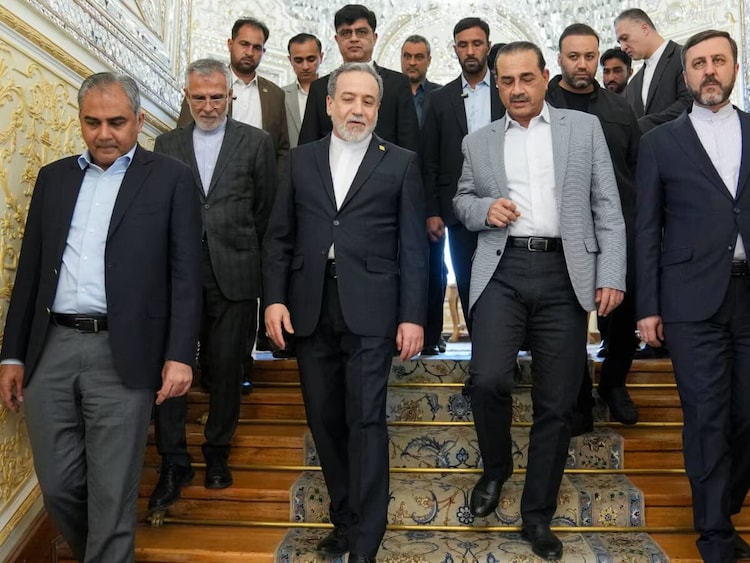
This close relationship, analysts believed, was one of the key reasons Munir chose Naqvi as his special representative to mediate between the US and Iran during the conflict.
It helped Munir to present a civilian face to the Iranian regime while completely sidelining any potential interference from the Sharif government.
Presently, Munir enjoys unchecked power in Pakistan. He not only controls the defence forces, but also wields influence over Pakistan’s foreign policy and economy. By propping up Naqvi, Munir essentially intends to send a broader message to Sharif, Unnithan said.
Amid mounting challenges from Balochistan to Pakistan-Occupied Kashmir (POK), analysts have speculated that Munir could seek to further consolidate influence by backing a lackey like Naqvi for a larger political role.
In fact, Unnithan underlined that Naqvi might have been tasked with creating ground for Munir to take over as president-cum-chief of defence forces, just like Pervez Musharraf.
POWER SHAKE-UP IN PAKISTAN ON CARDS?
The blue-eyed boy of the Pakistani army stirred a hornet’s nest at the Pakistan Economic Summit last week after he said that the country’s decades-old governance system had “collapsed”. It was seen as a veiled swipe at Sharif.
At the event, Naqvi called for creating new administrative units or provinces to improve accountability and access to justice.
His views were also backed by the military, with its spokesperson emphasising that an administrative reset was required not only for improving governance, but also from a security standpoint.
It has reopened a long-running debate. Over the years, a section in Pakistan has argued that the country’s existing provinces have become too large and centralised to govern effectively.
Interestingly, Pakistan’s ruling Pakistan Muslim League-Nawaz (PML-N) and the Pakistan Peoples Party (PPP) have remained silent. There is a key reason behind it.
PML-N and the PPP are Pakistan’s two largest parties. Both derive much of their electoral strength from Punjab and Sindh provinces, respectively. Thus, any change to provincial boundaries is likely to alter political representation and administrative control.
Naqvi’s remark has come under intense criticism from the ruling party, with defence minister Khawaja Asif leading the charge.
Showing the mirror to Naqvi, Asif said he had been in a “very powerful post” for the past three years. Calling him a “powerhouse”, Asif claimed that in several matters, Naqvi was not even answerable to the prime minister.
“If someone with such authority and influence still raises complaints, then other cabinet members should go home,” the defence minister said during a TV discussion.
Asif also criticised Naqvi’s “limited participation” in cabinet and parliamentary sessions. He claimed Naqvi attended only two or three cabinet meetings. Naqvi’s presence in Parliament has also been rare, Asif said.
“Naqvi sahib, begin the change in the system with your ministry,” Asif said. He further added, “As an example, bring about a revolution in the PCB. Cricket fans are not satisfied with PCB’s performance.”
The developments mark a rare public display of division at the top of Pakistan’s power structure. With Naqvi now openly challenging the system and promising action against powerful figures, including judges and politicians alike, a major power shake-up seems to be looming in Pakistan.
It, however, wouldn’t be surprising, as the military has always been the de facto ruler in Pakistan.
– Ends