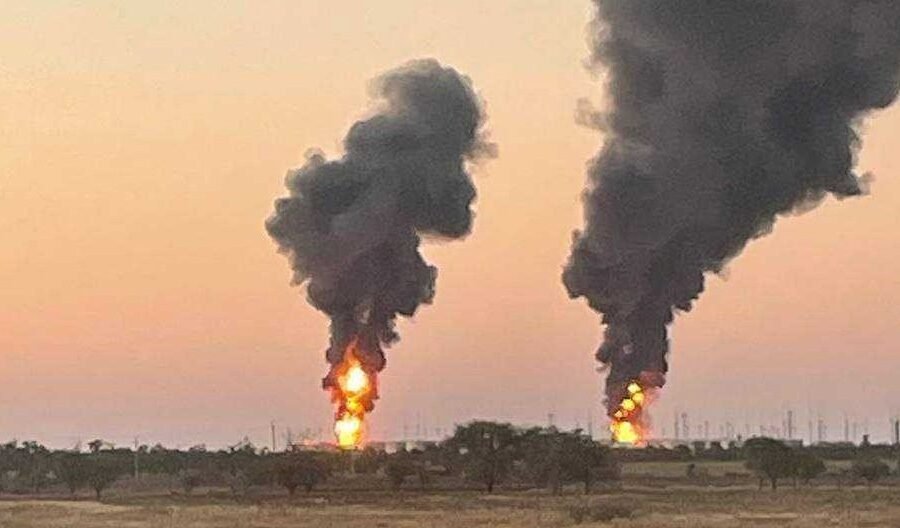
Russian crude processing fell to its lowest level in more than two decades in July after Ukraine expanded its drone campaign from refineries to tankers, pipelines and export infrastructure, according to The Moscow Times, citing Bloomberg analysis.
Russian refineries processed an estimated 3.6 million barrels per day in July, the lowest monthly level since May 2002 and roughly one-third below the seasonal average. Between 2020 and 2025, Russian refineries typically processed between 5.3 million and 5.6 million barrels per day during the same period.
Ukraine struck 18 Russian refineries in July, surpassing the previous monthly record of 17 attacks set in May. Targets included the 440,000-barrel-per-day Omsk refinery, Russia’s largest, more than 2,500 kilometers from the Ukrainian border. Ukrainian drones also struck five large oil tankers, five pieces of port infrastructure and two pipelines during the month. Bloomberg counted 30 attacks on Russia’s oil infrastructure in July, the second-highest monthly total since the full-scale invasion began.
Ukrainian forces concentrated on refineries during the first half of July before moving against tankers and export logistics later in the month. Refinery strikes resumed during the final week, with three large plants hit during the last three days of July and four more attacked over the weekend, according to Sergei Vakulenko of the Carnegie Russia Eurasia Center.
Last week, Russia extended its ban on most diesel and gasoline exports to prevent domestic shortages as refinery outages reduced fuel production. Reduced processing has also forced producers to export larger volumes of crude oil, increasing pressure on ports and tanker fleets already disrupted by Ukrainian strikes.
Bloomberg reported that only four tankers loaded crude at Novorossiysk during the week ending July 26, down from seven and eight during the previous two weeks. Jorge Leon, head of geopolitical analysis at Rystad Energy, said Russia can reroute some crude through Baltic ports, though pipeline, storage and tanker capacity is insufficient to replace all Black Sea export volumes.
By Charles Kennedy for Oilprice.com