The depth of knowledge that we have acquired from decades of Mars exploration has put us on a path to a deeper and multifaceted understanding of Mars, both as a whole and as a complex system. Today, NASA is at the precipice of a new era of Mars exploration that will hopefully expand to a ubiquitous presence at the Red Planet and be achieved by partnerships that extend further than those that NASA has had in the past.
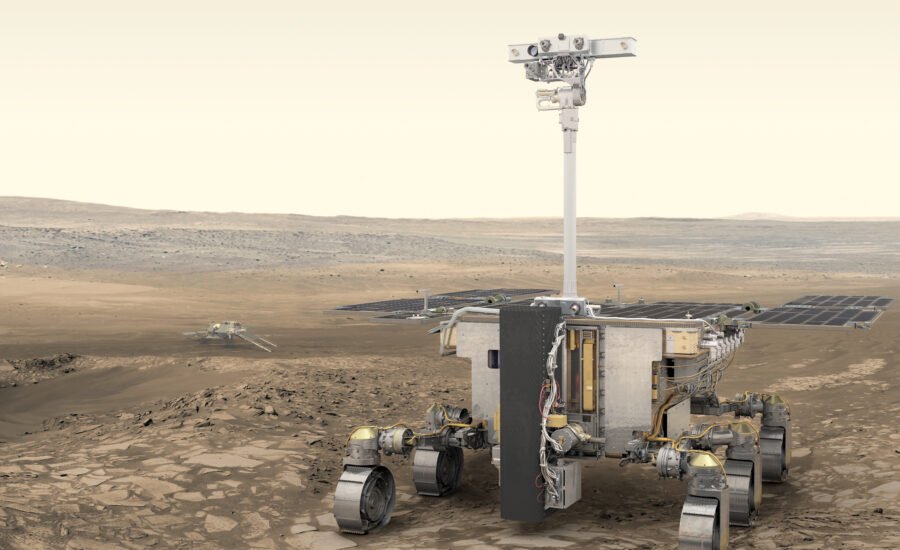
Countries around the world have been successfully exploring Mars alongside the U.S. for decades. July 2026 marked the 50th anniversary of Viking 1’s historic landing on Mars, which was followed by Viking 2 in September 1976. In 2028, the ESA’s (European Space Agency) long-anticipated Rosalind Franklin rover is slated to launch, following in Viking’s footsteps, by exploring the surface of Mars specifically to search for signs of life.
In the next phase of Mars exploration, we expect that commercial partnerships and commercial-led missions will play an even more significant part. Contracts with commercial partners have been an important part of achieving NASA’s most ambitious missions at Mars and elsewhere, but commercial-led Mars missions—such as the recently announced partnership between NASA and Relativity Space—will expand access to Mars and the scientific returns that we can achieve. This partnership will see the NASA-developed Aeolus atmospheric science instrument payload suite delivered to Mars by a Relativity Space-provided spacecraft and rocket. As the next generation of U.S. space industry partners become ever more capable, it will open up a new era of opportunities where NASA continues to set the strategic plan for scientific exploration of Mars and continues to support the development of a robust science community and technological development, which can then then to take advantage of an increasing number of opportunities to go to the Red Planet.
NASA has been preparing for this new era which has been successfully demonstrated at the Moon by its CLPS (Commercial Lunar Payload Services) initiative, and identified in the most recent plan from the agency’s Mars Exploration Program, Expanding the Horizons of Mars Science. The former shows how commercial vendors delivering NASA science and technology payloads to the Moon enables the continued growth of industry while creating a regular and sustained cadence of lunar exploration opportunities. As NASA ramps up activities related to the Artemis program, CLPS has demonstrated how commercial partnerships will be a vital part of establishing the surface architecture for Moon Base. The future for NASA’s Mars Exploration Program likely will see missions of opportunity—independent or NASA-funded commercial deliveries, or international partnerships—that serve as platforms for hosted payloads—such as small spacecraft or scientific instruments —or possibly opportunities for ridesharing on commercially developed delivery systems.
We expect that robotic scientific exploration will continue to lead the way, as it has for decades. NASA’s robotic missions explore new areas first and go further than we have the capabilities to send humans, enabling our future astronauts to explore safely and do even more complex tasks once they arrive at new destinations like Mars.
NASA’s orbiters, landers, rovers, and helicopters on Mars have provided a wealth of invaluable data that the global science community continues to use to gain an ever deeper and more complex understanding of the Red Planet, and that will be important to plan for human exploration. Instruments have collected measurements and continually monitored the radiation environment, providing data that can be used to ensure astronaut safety, both on the journey to Mars and while operating on the surface. Instruments that were designed to collect data about the properties of dust on Mars—both during global dust storms and deposited on surfaces across the planet— have measured its composition, but we have also seen creative uses by scientists and engineers of instruments to make measurements that provided unintended insights into crucial features, such as the dust’s static charge and size distribution. These data will be invaluable for designing systems to protect humans as they explore. Additionally, data collected over many years of searching for habitability and past habitable environments, as well as potential biosignatures for past life, have provided context for some of the science investigations that astronauts could plan to do on the surface, and for planetary protection considerations and safety.
Our next era of Mars exploration will continue the groundbreaking research, explore new aspects of the Martian system and add depth to the understanding that we know today. All of this work will contribute to narrowing or closing any data gaps as we prepare to send humans to Mars and prepare for exploration and research the astronauts will do on the surface. NASA, working together with a wealth of partners new and old, will endeavor to continuously expand our understanding of Mars’ past and present as we prepare for Mars’ future.