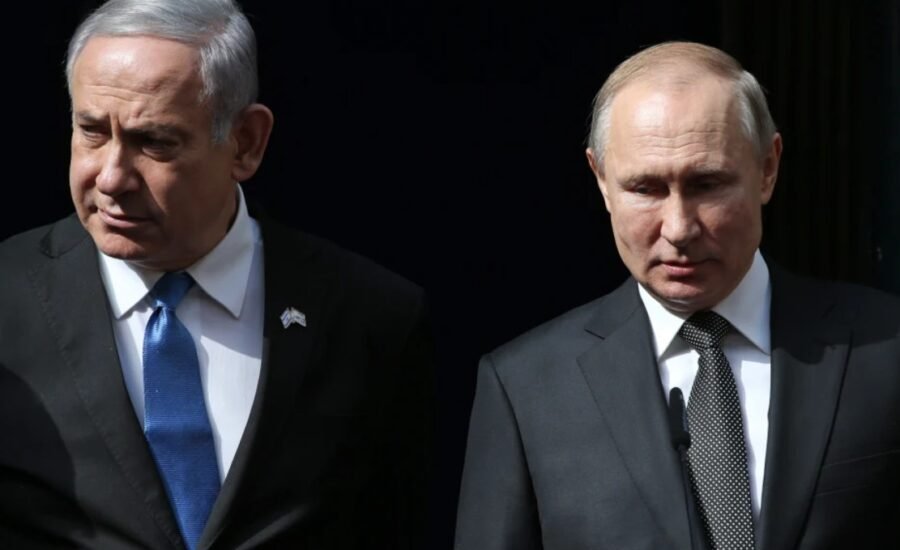
In June 2025, as Israel and Iran fought a brief 12-day war, Russian President Vladimir Putin was pressed on why Moscow was not providing more direct military support to Tehran.
Rather than answering directly, Putin deftly redirected the question, drawing attention to an often-overlooked reality about Israel: its large Russian-speaking population and the growing political weight of immigrants from the former Soviet Union.
“I want to draw your attention,” Putin said, “to the fact that almost two million people from the former Soviet Union and the Russian Federation reside in Israel. It is almost a Russian-speaking country today. And, undoubtedly, we always take this into account in Russia’s contemporary history.”
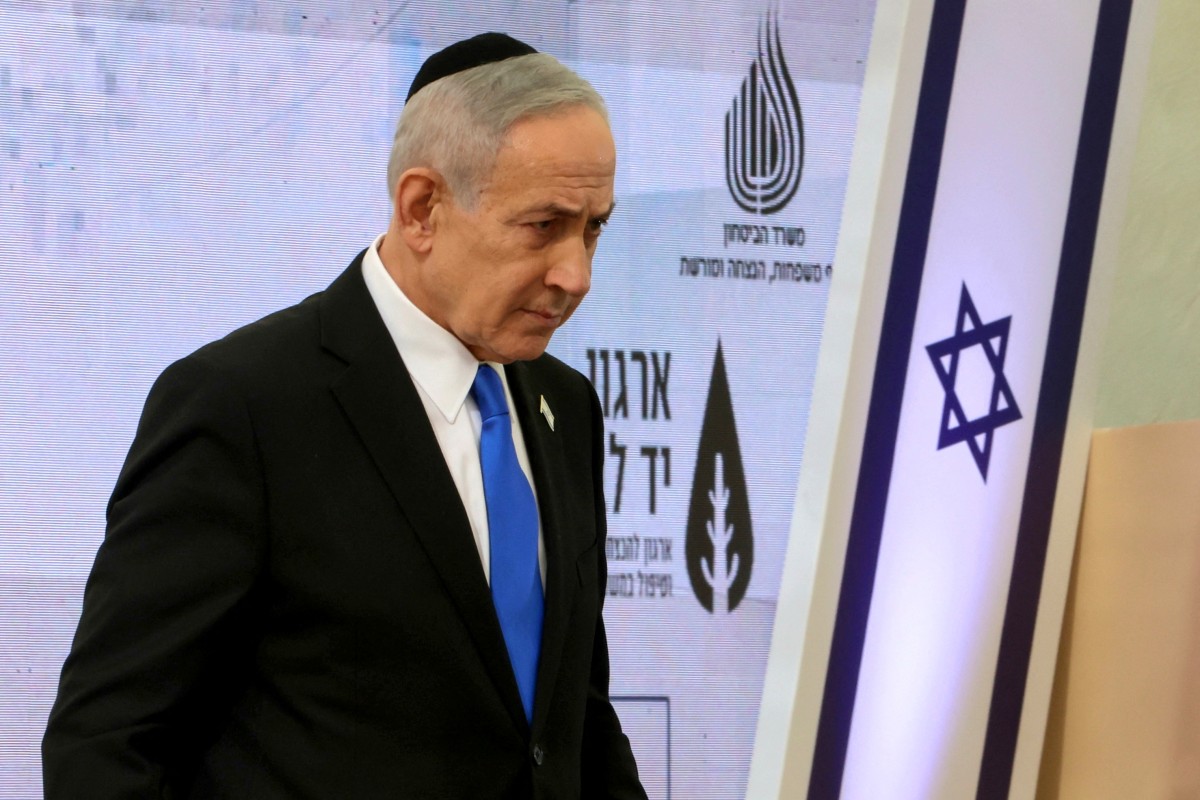
As Israel heads into polls in October this year that could close the country’s most difficult period in recent decades, Putin’s words will ring like a warning to Israeli politicians, especially Benjamin Netanyahu, the country’s longest-serving Prime Minister who is facing his toughest poll contest.
Indeed, the votes of Russian-speaking immigrants to Israel, many of whom are also called “Putin Aliyah,” those who migrated to Israel from Russia and former Soviet Union republics during the Putin era, could be the most decisive factor in the upcoming elections.
How Russian-Speakers Became the King-Makers in Israel
In Israel’s peculiar election system, just a few seats could decide the outcome of the country’s upcoming general elections, scheduled for October 27.
Israel’s parliament, the Knesset, has 120 seats, and a party, or a coalition, needs 61 seats to form the government.
However, in the last eight decades, Israel never had a single-party government, and the country has always been ruled by multi-party coalitions.
These 120 Knesset seats are filled by proportional representation and a 3.25% electoral threshold.
The whole country is treated as a single electoral district. Voters do not elect individual candidates or local representatives. Instead, they vote for a party, or a coalition of parties. Seats are distributed roughly in proportion to each list’s share of the national vote, provided the list clears the electoral threshold of 3.5%.
Meaning, all political parties/alliances that receive more than 3.5% of the electoral vote will get seats in the Knesset in proportion to their vote share.
For instance, if a party receives 10% of the total vote share, it will have 12 seats in the 120-seat Knesset.
Given the history of multi-party coalition governments in Israel, and a deeply fractured polity and mandates, 5-10 seats could very well decide the outcome of elections.
In the October elections, Israel’s Russian-speaking population could be the X factor that makes or breaks Netanyahu’s dream of coming back to power for a record seventh time.
Russian-Speaking Population in Israel
According to various estimates, Russian-speaking immigrants constitute 12 to 15% of eligible voters in Israel. However, some reports give a number as high as 17%.
This figure primarily covers immigrants and their descendants from the former Soviet Union/post-Soviet states who arrived mainly in the large 1990s wave.
After Putin launched an invasion of Crimea in 2014, and then attacked Ukraine in 2022, a second large wave of Russian-speaking Jews immigrated from Russia and Ukraine to Israel. These new Russian-speaking immigrants are known as “Putin-Aliyah.” Aliyah is the immigration of Jews from other countries to the Land of Israel.
Russian speakers could number around 1.3 million in the country’s population of 9.6 million.
Russian is described as the third most common native language in Israel after Hebrew and Arabic.
Furthermore, Russian-speakers are known for their high voter turnout and for voting as a bloc.
According to estimates, Russian speakers could influence 14-15 seats in the 120-member Knesset.
Given that in the current Knesset, the largest political party, Netanyahu’s Likud, won 34 seats, whereas the second-largest party, Yesh Atid, won only 24, 15 seats could very well decide who will form the next government.
Furthermore, nearly 125,000 Russian-speakers have migrated to Israel since Putin launched its military offensive in Ukraine in February 2022.
Therefore, in the October 2026 election, the influence of Russian-speaking immigrants in the electorate would be even stronger.
Another 125,000 Russian-speakers had migrated to Israel earlier after the occupation of Crimea by Russia in 2014.
Together, these 250,000 Russian-speaking immigrants, or “Putin-Aliyah,” could influence 5-6 seats in the Israeli Knesset, and the scramble for these votes has already begun.
Voting Preferences of Russian-Speakers in Israeli Elections
“People form norms and habits, and it is very hard to change their minds. Even when reality changes, they adjust their internal priorities to maintain the same voting patterns. For example: ‘Likud is terrible on religion and state issues, but I vote for them out of security considerations.’ That is why the new immigrant community is worth its weight in gold. The vote of this audience in the upcoming elections could set a trend for decades,” political psychologist Dr. Hagay Elkayam-Shalem told Haaretz.
There have been many studies on the voting behavior of these Russian-speaking immigrants. While these studies have reached different conclusions, it is safe to say that the Russian-speakers are not a monolithic bloc.
Elkayam-Shalem’s study of more than 600 Russian-speaking Israeli residents who arrived after 2012 found that 73% described their political views as “moderate” – 25% center-right, 30% centrist, and 18% center-left. Among those who arrived after 2022, more than a quarter identified as left-wing (27%).
The same study also found that in the 2022 elections, 45% of new Russian-speaking immigrants supported today’s opposition, and only 13% chose parties represented in the ruling coalition.
If these trends continue, it would mean that Netanyahu will have a hard time convincing these people to vote for his party.
However, Netanyahu and his Likud party were not always this unpopular among Russian-speaking immigrants.
According to multiple studies done by Prof. Zeev Hanin, a professor with the Department of Political Studies at Bar Ilan University and a lecturer at the Department of Israel in the Middle East and Political Science at Ariel University in Judea and Samaria, the Likud won 26.7% of the immigrant vote in the 2019 election, behind 40.2% of the vote share for Yisrael Beytenu; the Blue and White party won 15.1%; and the Kulanu party won 5.8% of the sector’s vote.
The rest of the votes were divided between the Labor party (2.3%), the New Right (3.2%), and Sephardic Ultra-Orthodox party Shas (1.5%).
So, in 2019, Netanyahu’s Likud won the second-highest share of votes among Russian-speaking immigrants in Israel.
However, together with Yisrael Beytenu, the right-wing parties in Israel got nearly 67% of the vote of Russian-speakers.
Hanin explains this preference for right-wing parties among Russian-speakers as the result of their experience in Russia in the troublesome 1990s.
“Immigrants from the former Soviet Union believe in strong leadership more than they believe in the democratic apparatus,” Remennick said. “The drunken democracy they experienced in the 1990s immediately after the dissolution of the Soviet Union was essentially chaos: there was no law and order, no work, and nothing to eat, which is why [Russian President] Vladimir Putin was able to rise to power and stay there for 20 years. People cling to the order and stability that a strong leader can provide.”
However, the voting preferences of Russian speakers are not static and have evolved over time and with changing circumstances.
For instance, they helped Labor’s success in 1992 and contributed to Netanyahu’s narrow 1996 prime ministerial win. They supported Ehud Barak in 1999 and later Ariel Sharon.
However, in the 2022 election, according to Elkayam-Shalem’s study of more than 600 Russian-speaking Israeli residents who arrived after 2012, only 13% chose parties represented in the ruling coalition, including Netanyahu’s Likud party.
Netanyahu is perhaps already aware of the criticality of this bloc and conscious of his falling support among them.
In April this year, Israel’s Channel 14 announced the acquisition of the Russian-language news site Mignews, one of the oldest Russian-language resources in Israel. Channel 14 is often called Israel’s equivalent of Fox News and is considered a mouthpiece for the Netanyahu camp and far-right views.
Another critical factor could be the October 7, 2023, Hamas terror attacks. The Russian-speaking immigrants have historically adopted a hawkish attitude on the Palestine issue and support a strong security state, a preference they might have carried from the security-focused Russian state.
In this new atmosphere where security issues are set to dominate the election debate, many Russian speakers could again shift to the right, which could benefit Netanyahu. A strong showing among Russian speakers could help Netanyahu balance some of his losses in other sections of Israeli society.
Whether or not Netanyahu is able to win back support among Russian speakers, the bloc is set to play the king-makers in the 2026 elections.
- Sumit Ahlawat has over a decade of experience in news media. He has worked with Press Trust of India, Times Now, Zee News, The Economic Times, and Microsoft News. He holds a Master’s Degree in International Media and Modern History from the University of Sheffield, UK.
- He can be reached at ahlawat.sumit85 (at) gmail.com