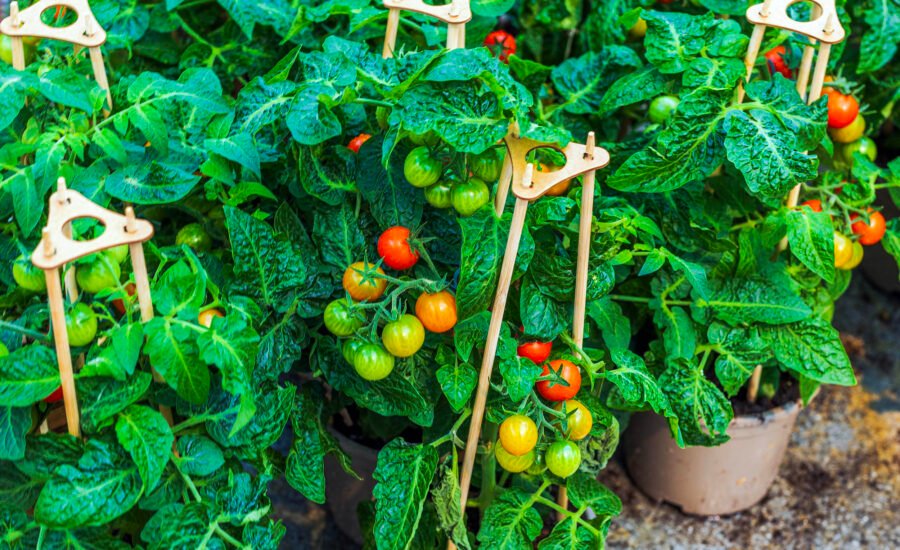
A tomato plant builds each leaf in a set order. It first marks where a new leaflet will form, then lets that spot grow into a full blade.
One hormone, called auxin, controls both steps. But how a single signal could start a new leaflet and later expand it was never clear.
The hormone puzzle begins

Auxin rarely acts alone inside a plant. In most situations, it raises the level of a second growth hormone, gibberellin, so the two usually promote growth at the same time.
That textbook relationship made the tomato leaf a real puzzle. If auxin only ever increased gibberellin, one hormone could not both start a new leaflet and later drive its growth.
A team led by Dr. Alon Israeli set out to watch the two hormones during leaf building. The work came from the lab of Professor Naomi Ori at the Hebrew University of Jerusalem.
“The same hormone has to accomplish two very different tasks during organ formation,” said Ori.
Tracking hormones as leaves grow
Tomato was a smart choice for this. Its leaves break into many small leaflets, so each new leaflet marks a spot where a leaf part begins.
The team sprayed young leaves with a synthetic auxin called picloram. Then they read which genes switched on and which shut off.
They also used mutant plants. One mutant blunts the auxin signal, so leaves barely respond, while another keeps the signal running far longer than normal.
The long-signal mutant matters here. Its leaves act as if auxin never lets up, which let the team see what a sustained signal does.
Gibberellin falls, then rises
A short burst of auxin did something odd. Within 10 minutes, it switched on genes that break gibberellin down and turned down the genes that build it.
Gibberellin fell right where a new leaflet was about to form. That local drop, not a rise, is what allowed the leaflet to begin.
Then the whole pattern reversed. In plants with a long-running auxin signal, gibberellin-making genes switched on instead, and levels rose again while the blade expanded outward.
So timing was the trick. A brief signal lowered gibberellin to start a leaflet, while a lasting signal raised it to drive growth.
Genes that switch on early
The gibberellin-breaking genes did not switch on everywhere. Their activity appeared right at the points where new leaflets were starting.
A separate gibberellin-making gene behaved the opposite way. It stayed active in the broad, growing regions of the leaf, where blades widened.
So the two gene sets divided the leaf’s work. One lowered gibberellin at the tiny starting points, while the other kept it high where tissue had to expand.
Mutants grew fewer leaflets
If low gibberellin lets leaflets form, then plants stuck with more of it should make fewer. That is exactly what the team found.
Plants engineered to keep gibberellin active grew fewer leaflets than normal ones. Knocking out a gibberellin-breaking gene called SlGA2ox4 did the same, reducing the leaflet count.
Growth worked the other way. Plants that could not make enough gibberellin failed to expand their blades the way auxin normally would.
One more test tied it all together. Adding gibberellin back to those blocked plants restored the extra growth, showing that gibberellin is the step auxin needs for expansion.
Less gibberellin, more leaflets
The team then tested the opposite case. They lowered gibberellin’s effect only in the strips between leaflets, where new leaflets almost never appear.
Extra leaflets formed in those strips. Lowering gibberellin in one small zone was enough to start a leaflet where the plant would not normally produce one.
Those strips normally stay bare. Gibberellin stays high there, and that high level holds leaflets back.
The rule looked simple. Where auxin lowered gibberellin, a leaflet could begin. Where gibberellin stayed high, the strip between leaflets stayed smooth.
A wider role across plants
The pattern may not stop with tomato leaves. The same gibberellin-breaking genes switch on at the start of flowers and roots in other plants, where auxin also sets the first mark.
That hints at a shared step in how plants position new organs. Lower gibberellin to open a spot, then raise it to grow what fills it.
Reduced gibberellin has also been tied to the start of ovules and lateral roots in earlier work. That fits a plant-wide pattern of lowering the hormone before a new organ forms.
The reversal also challenges the usual view. Auxin has long been seen as a simple booster of gibberellin, and this work shows it can first do the exact opposite.
What the work leaves open
A few questions remain. The authors write that it is hard to separate gibberellin’s local action from its broader role in how quickly an entire leaf matures.
Gibberellin may also move from growing leaflets into the strips between them, keeping those strips smooth. The work points to that movement but does not show how it happens.
The Israel Science Foundation supported the work, and the authors report no competing interests.
Down the road, tuning this balance could help breeders shape leaf form and branching in crops. That possibility remains for future research.
The secret behind leaf growth
“Our work shows that auxin achieves this by changing its conversation with gibberellin over time – first lowering gibberellin activity to allow a new organ to form and then increasing it to drive growth,” said Ori.
“This is done by affecting different target genes. This elegant two-step mechanism helps explain how plants build complex organs with remarkable precision.”
The findings reveal how precise hormone timing helps tomato plants build complex leaves and may guide future crop research.
The study is published in the journal Development.
—–
Like what you read? Subscribe to our newsletter for engaging articles, exclusive content, and the latest updates.
Check us out on EarthSnap, a free app brought to you by Eric Ralls and Earth.com.
—–