New Delhi:
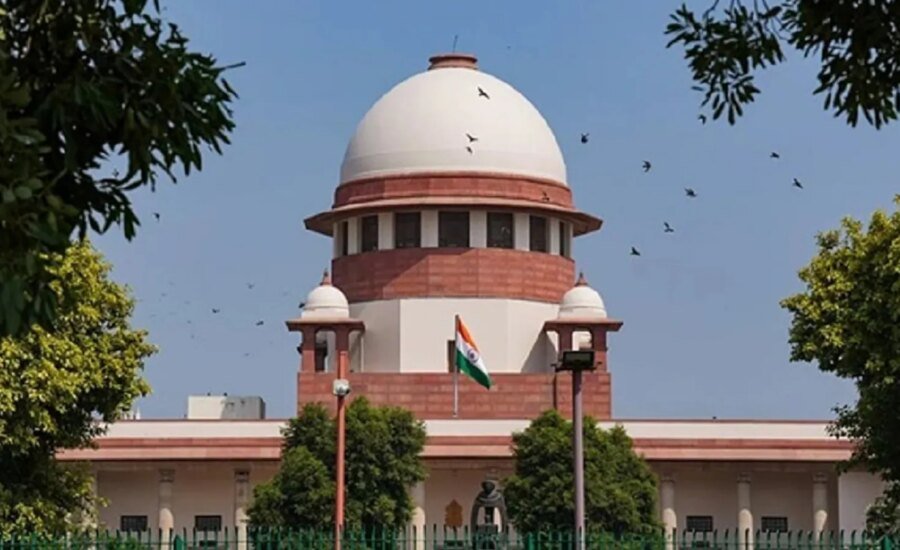
The Supreme Court has acquitted a man from Odisha who spent nearly 22 years in jail after his conviction for the murder of a woman in 2004, citing “weak and highly unreliable” evidence.
In a strong-worded observation, the top court noted that 22 years of a man’s life were taken away without any credible evidence.
A three-judge bench headed by Justice S K Singh, and Justices J B Pardiwala and K Vinod Chandran, stated that “arresting a person based solely on suspicion, using third-degree torture to extract a confession, and then convicting him on that basis is against the principles of justice”.
The 2004 case involved the murder of three women, identified as Kamala, Sonbari, and Ratnai – in Odisha’s Koraput district. The prosecution’s case rested almost entirely on the testimony of a single eyewitness – who claimed to have seen the man, identified as Arjun Jani, attack one of the woman – Ratanai – at around 1 am.
However, the witness said he did not see the bodies of the other two women that night, even though he passed through the same area at the time. He also confessed to telling different people about the incident at different times, but his story remained inconsistent.
After being convicted by the trial court, Jani appealed against it to the High Court. But due to a delay of 3,157 days, the court dismissed the appeal without even hearing it. By that time, Jani had been in prison for over 12 years. He then approached the Supreme Court, where the appeal was also delayed by 3,703 days.
The Supreme Court condoned the delay, stating that the High Court should have taken into account that it was an appeal filed from jail and that the accused had already been in prison for a long time.
The top court also pointed out several flaws in the investigation, including that the police failed to explain why suspicion fell directly on Jani and no one else. A witness admitted that the police had beaten Jani to extract an alleged confession, which is legally unacceptable.
There were also contradictions between the statements of witnesses and the investigating officer regarding the recovery of the weapon (stone) used in the murder.
The Supreme Court stated that a conviction based solely on eyewitness testimony is possible, but only if it is credible, consistent, and consistent with other circumstances. However, this was not the case.
Considering these facts, the Supreme Court concluded that the prosecution failed to prove the crime beyond reasonable doubt, and acquitted Jani.
The court also directed the District Legal Services Authority of Koraput to arrange for Jani’s rehabilitation and reintegration into society with the help of the district administration.