
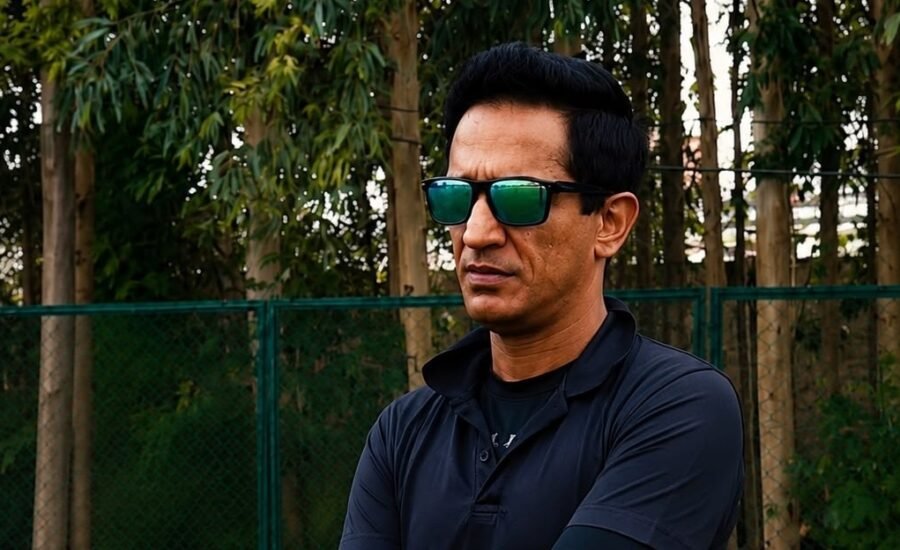
The All India Football Federation’s latest move involving India’s U-15 team has run into trouble almost as quickly as it was announced. Barely hours after the federation named Ranjit Bajaj as manager of the India U-15 side for the FIFA U-15 World Cup in Azerbaijan, the Minerva Academy owner has decided against taking up the role.
The appointment had followed weeks of debate around India’s youth football setup. While Bibiano Fernandes retained his position as head coach, the AIFF brought in Bajaj as team manager in what appeared to be an attempt to bring together one of the country’s most vocal grassroots advocates alongside its existing youth setup. Speaking exclusively to India Today, however, Bajaj revealed that he had not been informed about the appointment before it was made public.
“I had absolutely no idea. I found out only after I started getting calls asking me whether I had been appointed. That’s how I got to know. Nobody from the AIFF had spoken to me before the announcement.”
According to Bajaj, congratulatory messages were soon followed by calls from journalists seeking his reaction, even though he himself had no official confirmation from the federation.
“People started congratulating me. Reporters were calling me for quotes and reactions, and I was sitting there wondering what exactly had happened because nobody from the AIFF had even informed me. Only I knew what the real situation was.”
“I had to call the officials myself to ask whether it was true. Only then they told me, ‘Yes, this is going to happen. We’ll send you the letter in a while.’”
Bajaj said what disappointed him most was not the appointment itself, but the manner in which it was handled.
“This is not how a professional federation works. Unfortunately, this has become a repeated pattern.”
“These are the things that are hurting Indian football.”
The Minerva Academy owner later posted a video on social media confirming that he was unlikely to accept the assignment.
‘I DON’T SEE THE LOGIC’
Bajaj made it clear that his reservations have nothing to do with Bibiano Fernandes personally.
The 47-year-old said he respects Bibiano and the work he has done with India’s youth teams but questioned why the AIFF felt the need to create a structure where he would be expected to work with a coaching staff he had never worked alongside before.
“I don’t see the logic behind appointing me as manager and Bibiano as coach together.”
According to Bajaj, he would have been expected to work with Bibiano’s existing coaching staff instead of the support team he has built over the years at Minerva Academy.
“With absolutely no disrespect to Bibiano or his coaching staff, I don’t know them. If I don’t know the people around me, how am I supposed to work in complete sync with them?”
He then drew a comparison to two of football’s biggest coaching names.
“It’s like appointing Mourinho and Pep together. I’m not comparing our stature, but our styles are different. They have different ideas, different ways of working. It just doesn’t make sense.”
Throughout the conversation, Bajaj repeatedly stressed that his criticism was directed at the AIFF’s planning rather than Bibiano himself.
DID AIFF TRY TO PLEASE EVERYONE?
The episode has also reignited questions over how the AIFF arrived at this decision.
Over the past few months, Bajaj has become one of the most prominent voices in Indian football. Alongside regularly questioning the administration of the sport, he has consistently showcased the performances of Minerva Academy’s youth teams, who have won multiple AIFF Youth League titles, enjoyed success at several top-level international tournaments such as the Gothia Cup, The Mediterranean International Cup, and the Dana Cup. It has also produced several players who have gone on to represent India at youth and senior levels.
On the other side of the setup is Bibiano Fernandes, who has remained a key part of India’s age-group programme over the years, guiding the country to multiple SAFF youth titles while also helping India qualify for four AFC youth tournaments.
The contrasting profiles had prompted many to view the appointment as an attempt to combine grassroots expertise with continuity in the national setup.
There was, however, another school of thought too.
While Bajaj’s contribution to grassroots football is widely recognised, some coaches and observers have argued that his biggest strengths lie in building academies, identifying talent and managing football projects rather than in day-to-day tactical coaching. Whether that argument holds merit is a separate debate.
The immediate question, however, is why the AIFF announced a partnership without first ensuring everyone involved had clarity over their roles or, more importantly, even informing one of the appointees before making it public.
If the intention was to bring together two figures from Indian youth football, the execution instead left fresh questions over the federation’s planning and communication.
‘YOU CAN’T START 2 MONTHS BEFORE A WORLD CUP’
Bajaj also questioned the timing of the appointment.
With the FIFA U-15 World Cup scheduled to begin in October, he believes there is little time left to scout players, build combinations or prepare properly for a tournament of that scale.
“The tournament is only a couple of months away. What scouting can you do now? What planning can you do now?”
“Youth football is about long-term planning. You don’t start building a World Cup team two months before the tournament.”
For Bajaj, the issue reflects a much bigger problem within Indian football.
“This isn’t about me.”
“This is about the way Indian football continues to function. If we keep doing things like this, we’ll keep getting the same results.”
What began as an appointment that many believed could bring together two influential figures in Indian youth football has instead reignited questions over the federation’s decision-making. Barely hours after the announcement, the conversation has shifted away from India’s preparations for the FIFA U-15 World Cup and towards a more fundamental question: did the AIFF have a clear plan before making one of its biggest youth football announcements of the year?
– Ends