It’s only been three weeks since H5 bird flu was detected on South Australia’s Limestone Coast, and already encounters with sick or dead birds are becoming commonplace.
Maureen Christie, who lives in the seaside town of Carpenter Rocks, has been observing and protecting birds in the region for decades. She is now witnessing many stricken and suffering.
“It’s just awful,” Christie said, who helped establish the Friends of Shorebirds SE more than 20 years ago. “We expected it, but now it’s here, it’s just traumatic.”
The state’s south-east is renowned for its bird life, she said, which includes resident hooded plovers and oyster catchers, along with fly-ins from other countries, such as double-banded plovers, red-necked stints, sanderlings and ruddy turnstones.
Locals have been following state government advice to “avoid, record and report”, she said. Christie said many people have been getting in touch by email and phone to relay their own sightings and reports. “Everybody’s feeling distressed, but everybody’s trying to be supportive of one another.”
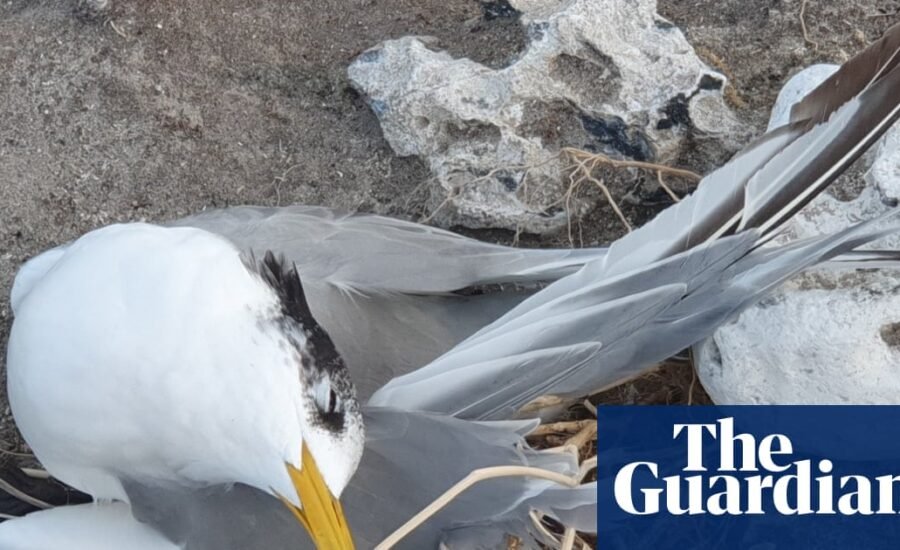
Since the first case in a local Australian seabird – a greater crested tern – was detected in early July, the region has seen dozens more suspected and confirmed cases, including the first confirmed mass mortality event at Baudin Rocks, a group of islets about 8km from the coastal town of Robe.
“Robe has a very special and unique environment that the local community knows, uses, celebrates and cares for,” the president of Friends of Little Dip Conservation Park and Robe Coast Care, Roland Wells, said. There’s everything from migratory, coastal and inland birds, wombats, wallabies and echidnas, as well as marine mammals such as sea lions, seals and dolphins.
He said people have undertaken conservation work over many decades to support shorebirds, which makes the recent arrival of bird flu “very upsetting”.
The situation has escalated considerably over the past week. Council officers from Robe district council have been identifying and reporting sick and deceased birds almost daily, mainly greater crested terns and some silver gulls.
A spokesperson for South Australia’s primary industries department said crested terns – which make up many of the bird flu cases – “commonly commingle” with other species like cormorants, gulls, grebes, ducks and other tern species. This increases the potential for transmission.
“From a conservation perspective, several threatened and priority species have been identified as high risk, including fairy terns,” the spokesperson said. “Marine mammals are also being closely monitored, with Australian sea lions and long-nosed fur seals among the species considered most vulnerable to potential impacts from the virus.”
Wildlife carers and clinics – now required to don personal protective equipment, and undertake strict cleaning and quarantine measures when dealing with other wild birds injured by cars, in dog and cat attacks or entanglement – have been calling on the state government for support.
Mish Simpson, from SKER wildlife veterinary centre, said the clinic was already at capacity before bird flu. But now, more wild birds are being brought in, because other vets have stopped accepting them, partly due to the additional requirements and the risk of exposure for other animals.
Simpson is concerned there isn’t enough emphasis on slowing the spread, which would give vets, carers and the community more time to prepare. For example, she said, the dead bodies of infected birds are often being left in the environment, where they pose an infection risk to other wildlife, particularly scavengers.
As the federal environment minister, Murray Watt, observed on Monday, the events rapidly unfolding in the south-east, and around Australia, are “the beginning of what is likely to be a long, difficult journey in terms of the impacts on wildlife.”
In Victoria, the chief veterinary officer, Dr Graeme Cooke, said recent aerial and ground surveillance near Portland and Nelson has already shown “a clear increase in the number of dead terns along that part of the coast”, consistent with deaths in South Australia.
“Last week we talked about individual detections; the first cases of the H5 bird flu in Victoria. We are now seeing a change.” What that means for hundreds of native species and the people who care for them remains uncertain.