- A long-standing theory about why insects never colonized the ocean just got shattered by a tiny larva doing something scientists insisted was physically impossible. See the record depths →
- This larva exploits one of Lake Malawi’s most hostile environments as its personal safe haven, and the strategy is even stranger than it sounds. Discover the survival strategy →
- The secret behind its impossible dives lies in a biological mechanism no researcher had ever seen in an insect before. Explore the resilin mechanism →
- Remove this single larva from Lake Malawi and a cascade of consequences begins, reaching all the way to human health. Trace the ecosystem cascade →
Many insects spend a large portion of their lives in aquatic environments as they mature. These environments tend to be warm, near the surface, and have slow-moving water. Therefore, imagine the surprise when scientists studying Lake Malawi found insect larvae surviving in unexpected places, challenging a long-standing theory about why insects inhabit certain aquatic habitats.
Lake Malawi Insect Dives to Incredible Depths
Lake Malawi is one of the deepest lakes in Africa. It is also home to more freshwater fish species than any other lake on the planet. However, the majority of the fish are not equipped to dive to the deepest parts of the lake. Consequently, many may assume the oxygen-free zone is devoid of life. As it turns out, this simply is not true.
According to a new study published in Science, the Chaoborus edulis fly larvae, a species of phantom midge, can be found by the billions in this area of the lake. This came as a shock to researchers, given the pressure the body is under as the larvae descend.
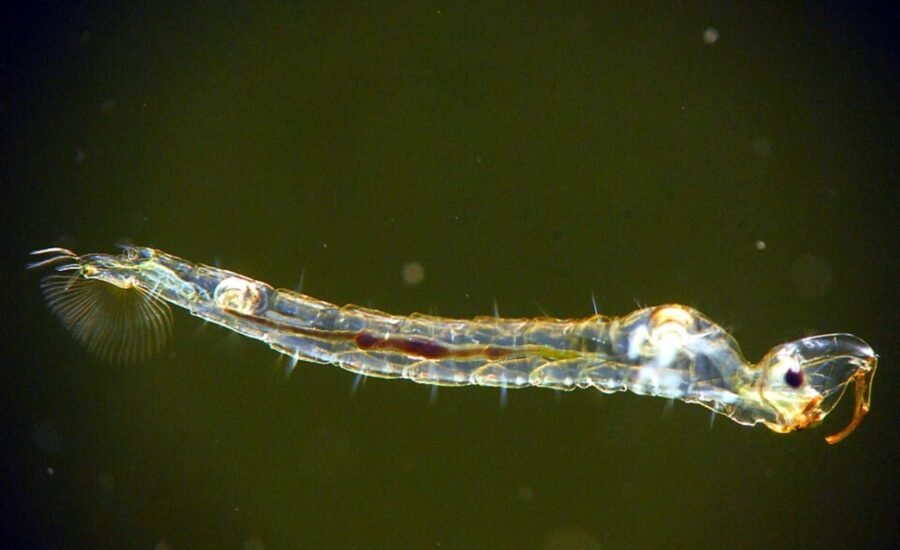
C. edulis larvae, similar to this phantom midge larvae, can dive to a depth of over 650 feet in Lake Malawi.
©TroutFodder/Shutterstock.com
To determine this, researchers from the University of British Columbia deployed a sonar system on the floor of Lake Malawi. The data returned showed large groups of C. edulis larvae moving to and from the lake’s oxygen-free zone.
At 656 feet below the water’s surface, C. edulis larvae should be incapable of withstanding pressures 20 times greater than those at sea level. Yet, they thrive.
Even more amazingly, researchers found that the larvae could survive at much greater depths. After collecting the larvae and placing them in mini-pressure chambers, they observed that the larvae remained active at pressures equivalent to 1,300 feet below the water’s surface—far deeper than they would naturally go. But why do these fly larvae dive so deep? The answer is to survive.
Why Chaoborus edulis Dives to the Oxygen-Free Zone of Lake Malawi
Insect larvae and nymphs spend a large portion of their lives in the water maturing into adults. While immature, the larvae and nymphs become part of the food chain for both semi-aquatic and aquatic animals. Because being a food source reduces their chances of reaching adulthood, C. edulis larvae dive to the oxygen-free zone of Lake Malawi to avoid predators.
The oxygen-free zone, or “dead zone,” of Lake Malawi is uninhabitable for most aquatic life. Fish and other creatures remain in the oxygenated portions of the lake, while C. edulis has exploited the dead zone as a refuge from predators.
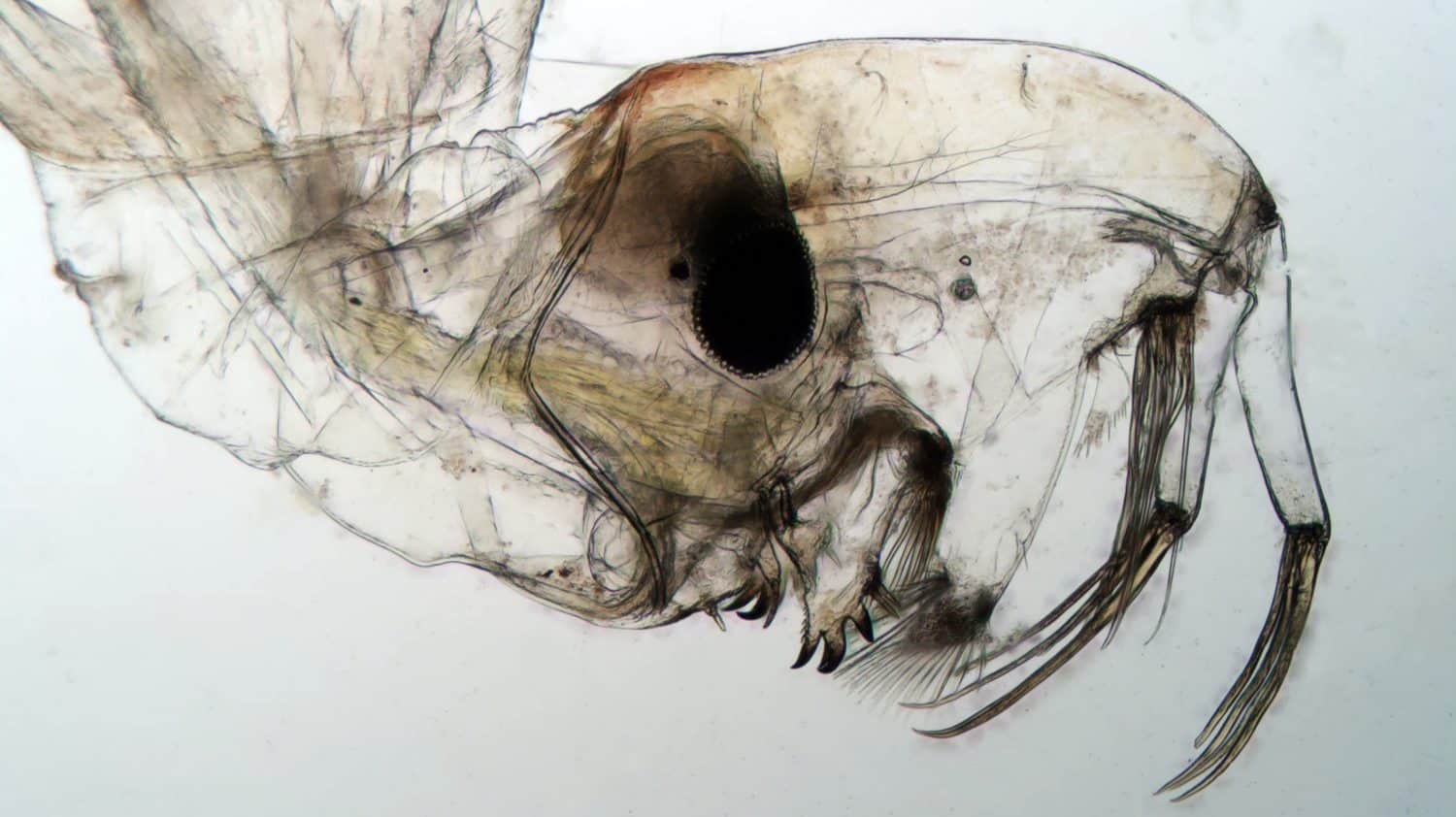
C. edulis larvae, similar to this phantom midge larva, descend hundreds of feet below the surface of Lake Malawi during the day to escape predators.
©D. Kucharski K. Kucharska/Shutterstock.com
According to the study, C. edulis larvae will descend to deep portions of the lake where light cannot penetrate during daylight hours. The larvae are safe from predators hundreds of feet below the surface. However, they must return to the upper portions of the lake to feed.
When returning from the depths of Lake Malawi, the larvae must pass through zones where their predators lie in wait. However, they do this at night, when C. edulis is not as easily seen. Their goal is to feed during the night and return to the dead zone before fish predators notice their presence.
How Chaoborus edulis Dives to Incredible Depths
It was believed that insects had never established themselves in ocean ecosystems because the pressure would be too great, crushing their air sacs. This widely accepted theory has now been turned on its head, thanks to the discovery of the depths C. edulis can dive without harm coming to the insect.
C. edulis has a respiratory system unlike what researchers have seen before. Because of this respiratory adaptation, these insects can dive to depths of over 650 feet daily.

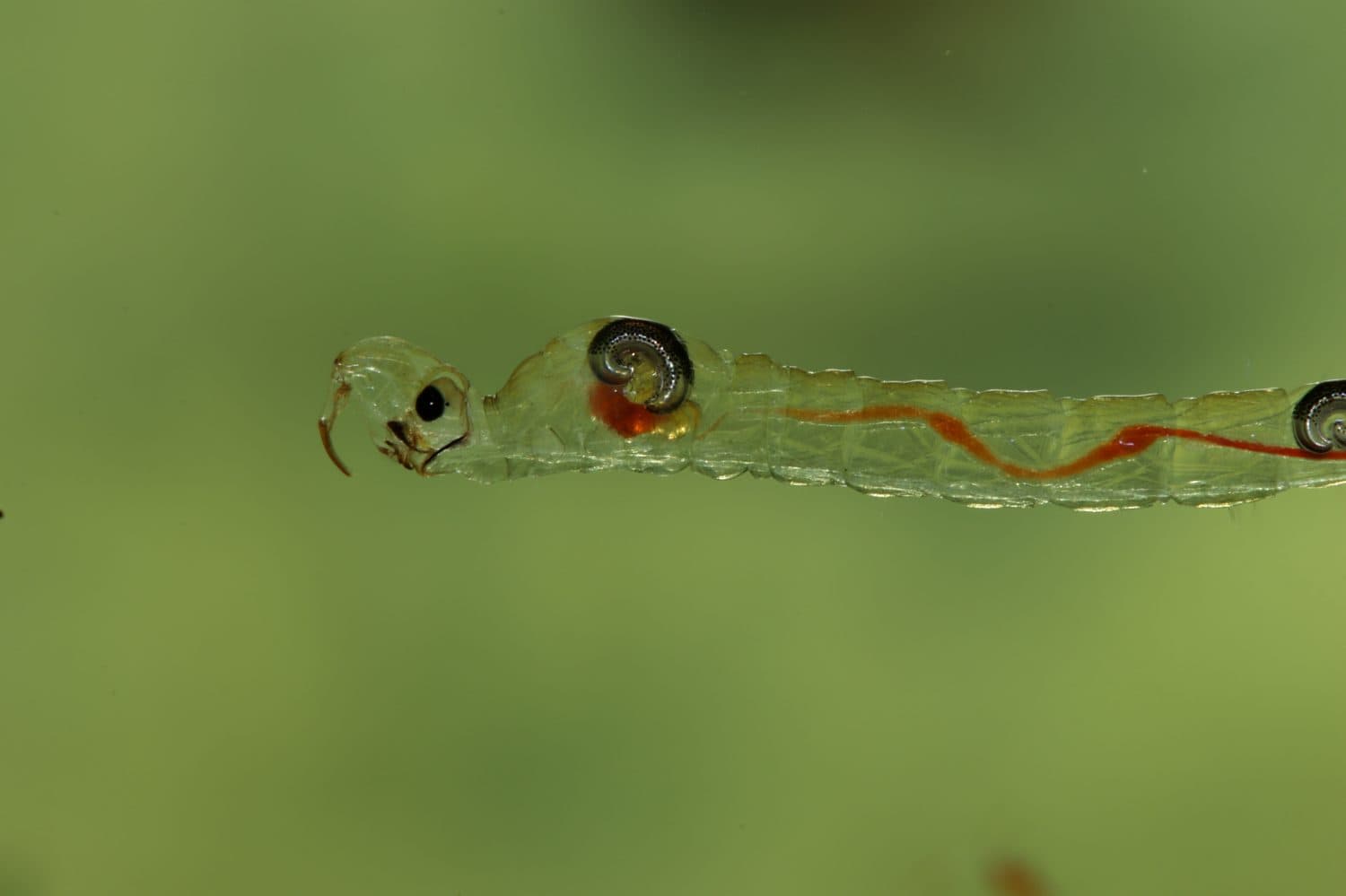
C. edulis, similar to this phantom midge larva, has two pairs of air sacs that allow it to ascend and descend as it pleases.
©Viridiflavus, CC BY-SA 3.0 , via Wikimedia Commons – Original / License
According to the study, C. edulis has a respiratory system that is partially comprised of four separate air sacs. The two pairs of air sacs inflate or deflate to different sizes depending on whether C. edulis is ascending or descending the lake.
The air sacs can stretch because they are made of resilin, a protein that responds to changes in pH levels. This adaptation allows the insects to move up and down in the lake as needed.
What Role Does Chaoborus edulis Play in the Lake Malawi Ecosystem?
Despite its size, C. edulis is a keystone species in the Lake Malawi ecosystem. This means that if the insect were to disappear, it would trigger a massive disruption and potentially a collapse of the ecosystem.
C. edulis is a staple prey for many deep-water fish in Lake Malawi. Two in particular—the Malawi eyebiter, a predatory cichlid, and the Malawi squeaker, an upside-down catfish—eat the majority of the C. edulis larvae and pupae. Without the insect available for them to consume, these fish populations would decline dramatically and could potentially disappear.
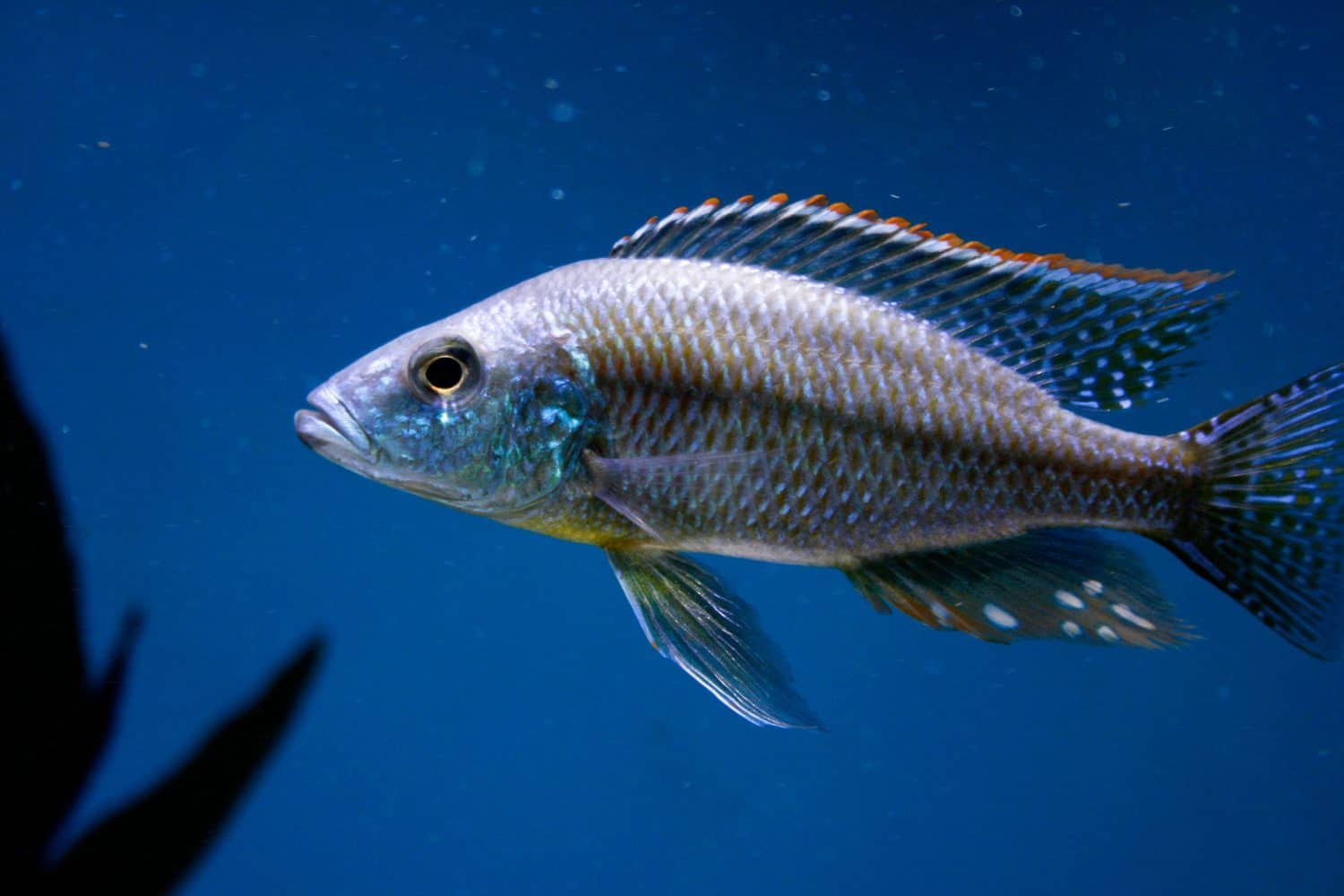
The Malawi eyebiter is one of the fish that prey on C. edulis larvae.
©Richelle Cloutier/Shutterstock.com
In addition to being prey, C. edulis is also a predator. The larvae feed on crustacean zooplankton. By eating zooplankton, the larvae not only grow but also help regulate the zooplankton population. If the crustacean zooplankton population were to grow out of control, there would be significant changes in nutrient cycling (the balance of nitrogen, phosphorus, and carbon in the water), which could lead to both phytoplankton blooms and depletion of food sources.
Algae blooms could also become a problem in Lake Malawi. As crustacean zooplankton consume algae, they accumulate toxins, which are then transferred to fish and, eventually, to people higher up the food chain. Both fish and those who eat them could face health risks from the toxin load associated with algal blooms.
Without C. edulis in Lake Malawi, the ecosystem would deteriorate over time. This loss of balance would create a habitat that is no longer sustainable for both large and small creatures, demonstrating just how important this small insect is to its aquatic ecosystem.
Thank you for reading! Have some feedback for us?
Thank you for your feedback!
We appreciate your help in improving our content.
Our editorial team will review your suggestions and make any necessary updates.
There was an error submitting your feedback. Please try again.