
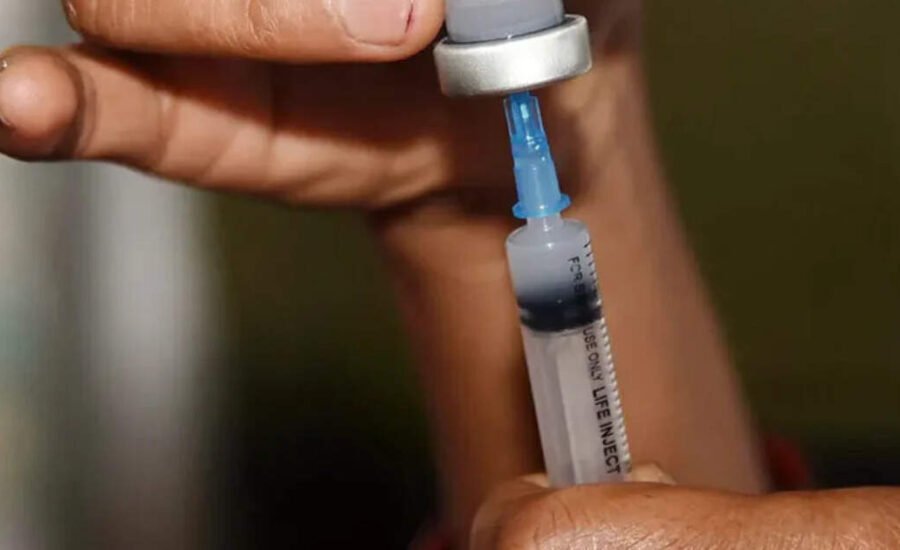
The Japanese company expects to commercially launch Qdenga, the first dengue vaccine approved in India, in the first half of calendar 2027. It also plans to pursue government procurement and eventual inclusion in the National Immunisation Programme (NIP), Mahender Nayak, Head, Intercontinental Markets, Takeda Pharma, told ET.
 ET Bureau
Japan’s Takeda Bets on Dengue Vax to Reshape India Playbook
Takeda India recently received Drug Controller General of India (DCGI) approval for Qdenga, which is a preventive vaccine against dengue for individuals aged 4–60. More than 40 countries had approved QDenga earlier.
The company is currently completing import-related regulatory processes before commercialising the vaccine.
“It (launch) should be in the first half of next calendar year (2027,” Nayak said.

The strategy marks a significant broadening of Takeda’s India playbook.
“Our portfolio has varied, but since 2019, our focus has been in oncology, rare diseases, and plasma-derived therapies. Qdenga brings us into the forefront of public health and elevates the responsibility that we have as a company in India,” said Nayak. “It’s a pivotal moment for us in terms of how we look at India,” he added.As with most vaccines introduced in India, Takeda plans to begin sales through the private market before expanding access through public procurement.
“The initial access will be through the private market…And then we would work also with the state governments… to make sure that we have some kind of partnership to make it available in the public… And eventually it will be the National Immunisation Programme,” Nayak said.
Vector-Borne Diseases
India accounts for nearly one-third of the global dengue burden, with cases rising eleven-fold over the past decade, making vaccines a significant long-term growth opportunity for Takeda.
According to data from the Ministry of Health’s National Centre for Vector Borne Diseases Control, reported cases stood at over 121,000 in 2025, with the number of deaths at 131. In 2024, the total number of reported cases stood at 233,519 and the number of deaths were at 297, while in 2023 the total cases were 289,235 with the number of deaths at 485, according to the ministry’s data.
However, modelling analyses suggest the dengue burden in India is higher than reported, likely representing tens of millions of infections each year.
Qdenga can be used in individuals regardless of previous dengue exposure, without the need for pre-vaccination testing.
Dengue is a mosquito-borne viral disease that poses a significant global public health threat, with prevalence in over 125 countries. India has all four dengue virus serotypes and QDenga is designed to protect against all four serotypes. The vaccine is administered subcutaneously 0.5 mL as a two-dose regimen, with doses given three months apart.
After two doses of vaccine, 4.5 year data showed 84.1% efficacy against dengue-related hospitalisations. The vaccine has also showed sustained safety and efficacy for up to seven years across all four dengue virus serotypes.
The company has not yet begun formal discussions on NIP inclusion, with its immediate focus having been regulatory approval. Nayak said talks with the Centre and state governments would now begin as part of the normal course for vaccine adoption.
While Nayak refused to disclose pricing, he added that affordability would be central to Takeda’s commercial strategy.
“There have been some initial discussions…We want to make sure that we provide a broad, equitable, as well as a sustainable access for a population in India… we’ll need to really make sure that we have the right price for the Indian population,” he said.
“We’re looking at Bio-E supporting half of the manufacturing of 50 million doses. Our full capacity would be 100 million doses,” he said. Takeda is targeting 2030 for commercial production from Biological E.
Local production is expected to support affordability and government procurement.
‘For the Masses’
“One of the things we want to make sure of is that we support the Make in India requirement, especially as we move into the National Immunisation Programme, but also to be able to provide the vaccine for the population.”
Beyond vaccines, India remains central to Takeda’s innovative medicines strategy as the company is preparing to introduce eight late-stage pipeline medicines in India.
Takeda is awaiting approval for a treatment for metastatic colorectal cancer and is preparing multiple global launches across immunology, haematology and neuroscience.
“We do have in total eight late-stage pipeline assets globally, where we’re working very closely to ensure that we launch in India,” Nayak said.
He identified three near-term candidates: zasocitinib for psoriasis, psoriatic arthritis and inflammatory bowel disease; rusfertide for polycythemia vera (a rare type of blood cancer); and oveporexton for narcolepsy (a type of brain disorder).
However, the dengue opportunity is fundamentally different from its existing businesses because of the sheer size of the eligible population, said Nayak.