The Supreme Court has clarified that its recent interim order restricting the sharing and uploading of audio-video clips of court proceedings does not prohibit recognised news organisations from reporting on hearings. The Court said that the restriction is limited to the use of audio and video clips of court proceedings in news reports.
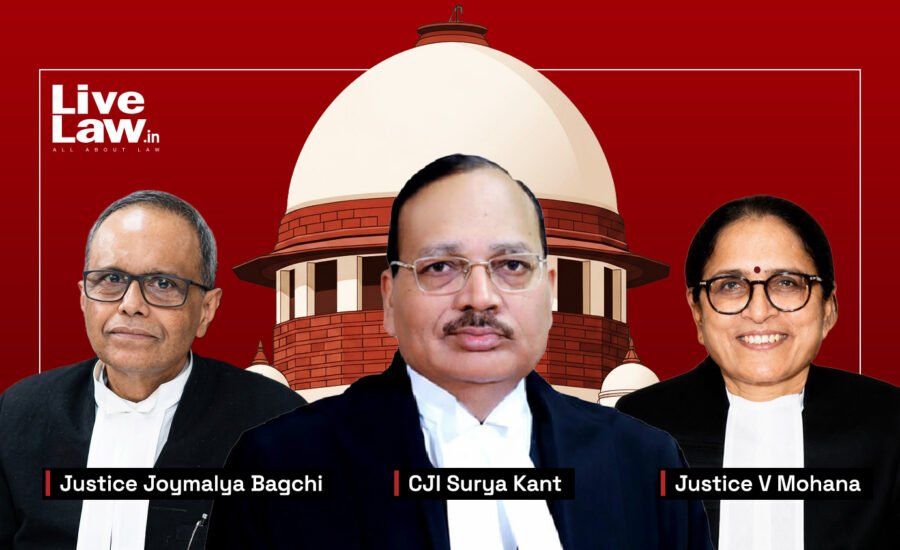
A Bench comprising Chief Justice of India Surya Kant, Justice Joymalya Bagchi and Justice V. Mohana issued the clarification while hearing a batch of petitions concerning live streaming and recording of court proceedings.
The clarification came after the Court noted that “some confusion persists” regarding paragraph 11 of its July 24 interim order, which had said that the bar on sharing of clips of hearings will not bar reporting by recognised news outlets.
Addressing the ambiguity, the Bench observed:
“The said paragraph makes it clear that the order is not to be construed as imposing a blanket prohibition on the reporting of court proceedings by recognised news outlets.”


The Court clarified that recognised news outlets are free to continue reporting court proceedings and informing the public about legal developments and judicial pronouncements. However, it emphasised that such reporting cannot include audio or video clips of the court proceedings.
The order states:
“Such outlets may, therefore, continue to report on the proceedings and inform the general public of legal developments and judicial pronouncements, save that audio or video clips of the court proceedings shall not be utilised in the course of such reportage.”
In sum, while news outlets may continue to report on the court proceedings, they shall nonetheless remain bound by the restrictions set out in paragraph 10.”
As per paragraph 10 of the July 24 order, there is a prohibition on the extraction, editing, dissemination, reposting, uploading or monetization of audio and video recordings of judicial proceedings on social media and other digital platforms without prior permission from the Registrar General of the concerned court (Supreme Court/High Court).
During the hearing, the Court also allowed an intervention application filed by RTI activists who are opposing a blanket prohibition on sharing of court clips., permitting the applicants to assist the Court as intervenors.
The matter was adjourned till September 18, 2026, giving time to the Union, social media intermediaries and High Courts to submit their responses.
Background
The Court was dealing with a public interest litigation filed by journalist Harshita Grover seeking guidelines to regulate the clipping, editing, dissemination and monetization of audiovisual recordings of court proceedings on digital platforms. The petition contends that selective and de-contextualised circulation of courtroom exchanges is undermining the dignity of courts and eroding public confidence in the justice delivery system.
While passing the interim order, on July 24, the Court had also issued notice on the petition and impleaded all High Courts. It directed the Union Government to place before the Court a proposal identifying the nodal ministries that could implement the reliefs sought in the petition. The Court also asked the High Courts to submit reports on the adoption of the Supreme Court’s model livestreaming guidelines and explain the impact of continuous livestreaming of proceedings.
Notice was also issued to social media intermediaries, including Meta and X.
Case : Harshita Grover v. Union of India and others | W.P.(C) No. 751/2026