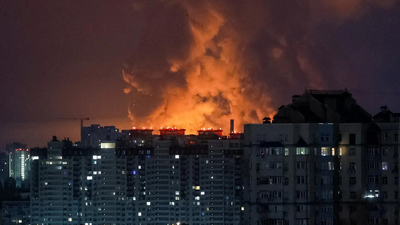
The world today is so well-connected and interlinked that the petrol in your car costs more because missiles are flying over the Persian Gulf, your online order is delayed because ships are avoiding the Red Sea, and soldiers who learnt to fight Russian drones in Ukraine are now training troops thousands of miles away in the Middle East.None of these events belong to the same war, yet each is shaping the others in ways that would have seemed improbable only a few years ago. Modern conflicts no longer respect geography. They leap across continents through alliances, supply chains, technology and global markets, dragging in countries that never intended to become participants.The result is a world where a battlefield in eastern Europe can influence security in the Gulf, and a strike in Iran can disrupt trade reaching Africa and Asia. So when does a collection of separate wars stop being separate? And at what point does history begin to call it something far bigger?What made World War I and II differentMost wars in history stay contained. Two nations, or a small cluster of them, fight over a border, a resource or a grudge, while the rest of the world watches from a safe distance. World War I and World War II broke that pattern completely.
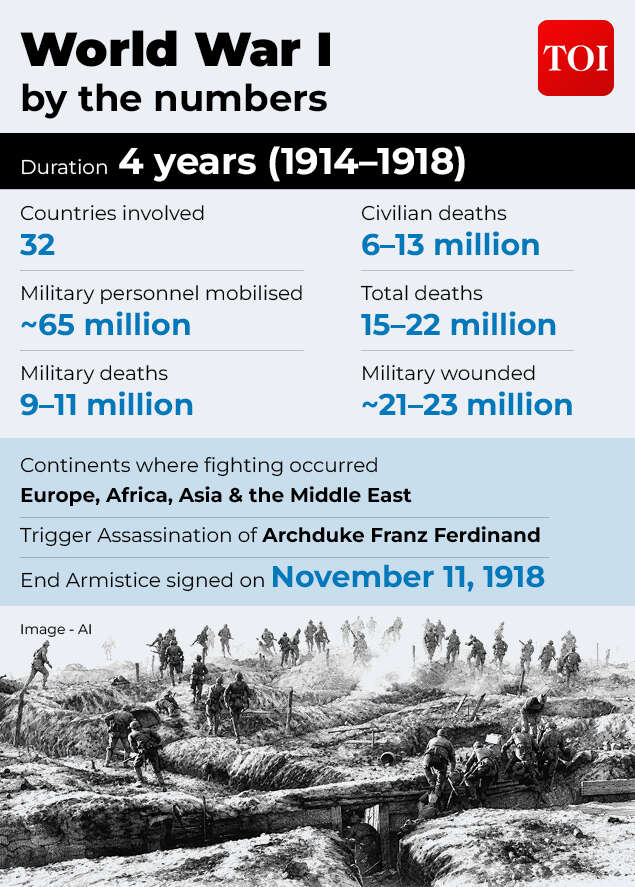
The Treaty of Versailles that ended the war imposed harsh terms on Germany, creating tensions that contributed to the outbreak of World War II
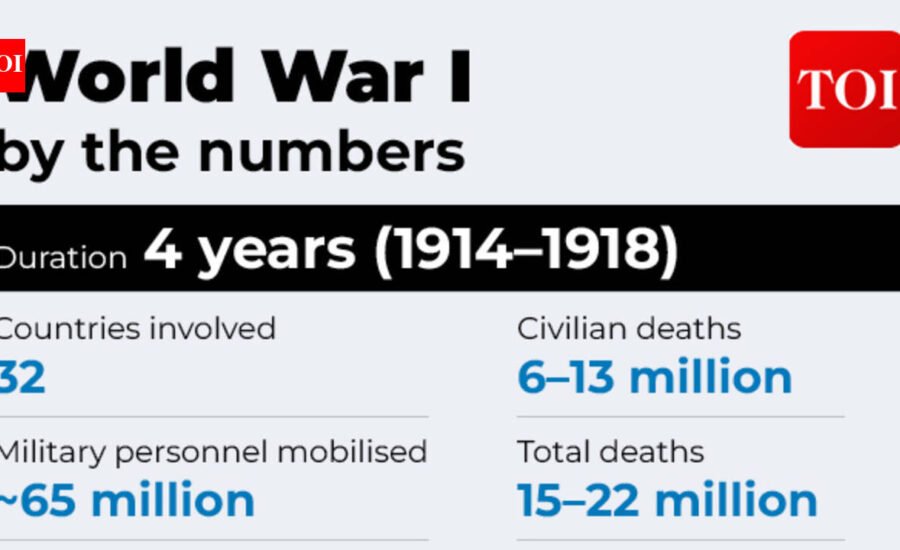
Two definitions help explain why. A world war is generally understood as a conflict involving most of the world’s major powers, fought across several regions or continents at once, rather than on a single battlefield. Total war, meanwhile, describes a conflict in which entire nations mobilise, not just their armies. Factories, farms, civilians and economies are all pulled in, and the usual line between soldier and civilian starts to disappear.Both world wars fit this because of alliances. One assassination in Sarajevo in 1914 triggered a chain reaction, because treaties meant Russia had to back Serbia, Germany had to back Austria-Hungary, and France and Britain were bound to follow. Colonies across Africa and Asia were dragged in simply because their rulers in London, Paris or Berlin were suddenly at war. By 1945, the fighting had touched every inhabited continent except Antarctica, with more than thirty countries formally involved. What made these wars “world” wars was never the death toll alone. It was that a regional dispute could not stay regional, because everyone was tied to everyone else.
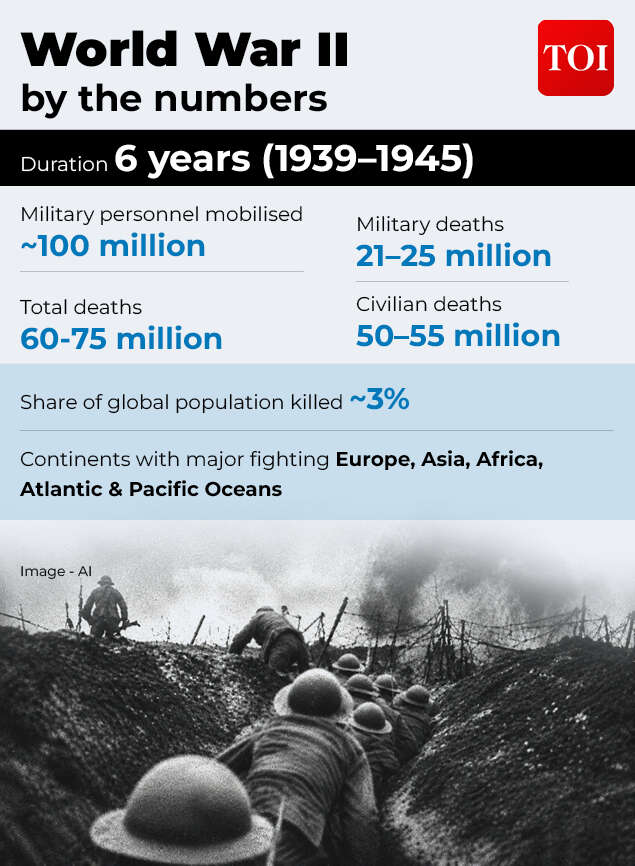
The war ended with the creation of the United Nations, while the US and Soviet Union emerged as rival superpowers, ushering in the Cold War.
The two wars at the centre of it allStart with Ukraine. Russia’s full scale invasion has become the largest war in Europe since 1945. Russia now controls roughly a fifth of Ukrainian territory, and the human cost on both sides runs into hundreds of thousands. Ceasefires attempted around Orthodox Easter and Victory Day in 2026 both collapsed within days, each side blaming the other for breaking the truce.Then there is Iran. On February 28, 2026, the United States and Israel launched coordinated strikes on Iranian targets, killing Supreme Leader Ali Khamenei along with dozens of officials. Iran responded with missile and drone attacks on American and Israeli interests across the Middle East. Months later, the fighting has not stopped. The Strait of Hormuz, a narrow waterway that normally carries around a fifth of the world’s oil, has been effectively shut for long stretches, with commercial traffic through it falling by more than 90 percent at points. Talks between Washington and Tehran keep almost starting, then stalling again.Neither war was ever going to stay small. What is striking is how fast the fallout from each one has spilled into places that had nothing to do with the original argument.Why so many countries are being pulled inIran struck American bases and embassies across the United Arab Emirates, Saudi Arabia, Qatar, Kuwait, Iraq, Oman and Jordan, arguing that any country hosting US forces was a legitimate target. In July, Egypt was hit for the first time, with a strike setting fire to vessels at one of its ports. NATO aircraft based at Incirlik in Turkey shot down Iranian drones and missiles heading that way, pulling the alliance in whether its members wanted that or not.The Houthis in Yemen then joined, firing missiles at both Israel and Saudi oil tankers, reviving the Red Sea shipping crisis. Saudi Arabia responded by assembling a coalition to protect Red Sea shipping, and more than a dozen countries signed up within days, among them Turkey, Egypt, Pakistan, Bangladesh, Jordan, Kuwait, Bahrain, Qatar, Djibouti, Somalia, Sudan and the Comoros. That single coalition spans the Middle East, South Asia and East Africa, built almost overnight because tankers were being attacked.Even Ukraine, already fighting its own war, ended up pulled into Iran’s. After the US briefly paused direct military aid to Kyiv, Washington asked Ukrainian specialists to help Gulf states defend against Iranian drones, given Ukraine’s hard won experience countering exactly that weapon. The UK and France, meanwhile, sent warships to the Mediterranean as tensions rose. None of these countries chose this war. Geography, alliances and old defence agreements chose it for them, which is precisely the pattern that made 1914 so dangerous.Sometimes, hostilities are waged without missiles or tanks. They can unfold through diplomacy, migration and the movement of people across borders. Some analysts believe the recent scenes in Ceuta may be an example of exactly that.Morocco’s strategic ties with the United States and Israel have come under renewed focus since it normalised relations with Israel under the 2020 Abraham Accords, brokered by Washington. In return, the US recognised Moroccan sovereignty over the disputed territory of Western Sahara.Geopolitical analyst Robinder Sachdev argues that these relationships may help explain the timing of the crisis. “Israel and the United States would both like to settle scores with Spain. Spain has been one of Europe’s most vocal critics of Israel’s actions in Gaza. It recognised the State of Palestine in 2024, while Spanish leaders have described Benjamin Netanyahu as a war criminal and accused Israel of committing genocide in Gaza. The United States, meanwhile, has been angered by Spain’s refusal, despite being a NATO member, to support its military operations against Iran or permit the use of Spanish bases and airspace for those operations,” he said. Sachdev added that Spanish Prime Minister Pedro Sánchez’s recent visit to Algeria may have provided “a convenient trigger”.Then and now: How war itself has changedThe wars of 1914 and 1939 were fought largely by soldiers, in uniform, on defined fronts. Trenches, tanks and infantry advances decided who held ground, and it usually took a rifle, a bayonet or a bomber crew overhead to kill someone. Civilians suffered terribly, but mostly as the target of sieges, bombing raids and blockades, rather than as the ones pulling the trigger.
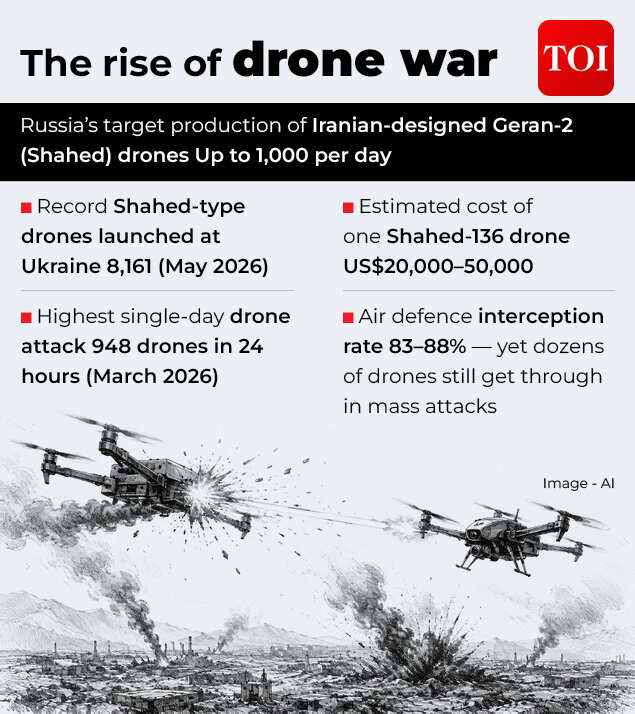
Mass-produced drones are reshaping modern warfare by overwhelming air defences
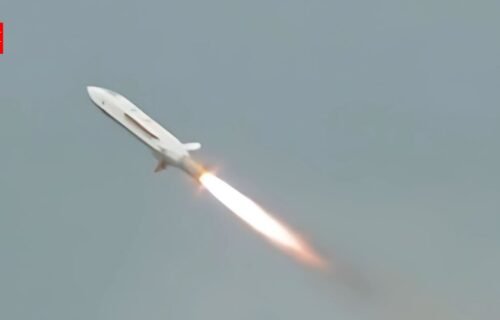
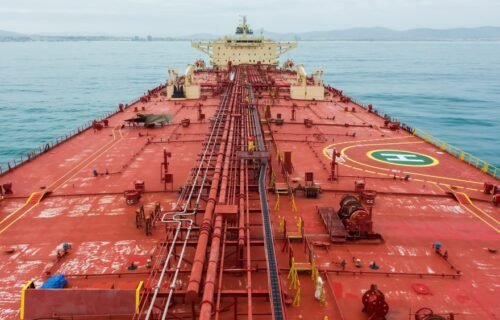
Ukraine and Iran are being fought very differently. Cheap, mass produced drones, some costing little more than a family car, now do work that once needed a fighter jet and a trained pilot. Iran has spent years supplying Russia with exactly these Shahed drones, the same low cost weapons that have battered Ukrainian cities for years, meaning a single production line in Iran has effectively been arming two wars at once. Ukraine, in turn, has built its own drone industry from scratch and become so good at shooting down and building them that other countries now want its expertise, which is precisely why its specialists ended up training Gulf soldiers.Missiles are more precise, but interceptors to stop them are running low. The US military has reportedly burned through roughly 80 percent of its stock for one key missile defence system, leaving stockpiles worryingly thin. Warfare has also moved onto tankers, pipelines and container ships, since closing a shipping lane can hurt an enemy’s economy without a single soldier crossing a border. None of this needs a formal army mobilised at home the way 1939 did. A war today can be fought with drone factories, sanctions and rerouted cargo ships, and still reach just as far.The economic battlefieldThe closure of the Strait of Hormuz forced tankers to reroute around the Cape of Good Hope, adding weeks to journeys and pushing up insurance costs and fuel prices worldwide. Countries with no direct stake in either war, from shipping firms in Asia to fuel importers in Africa, have felt the knock-on effects through higher prices and delayed cargo.
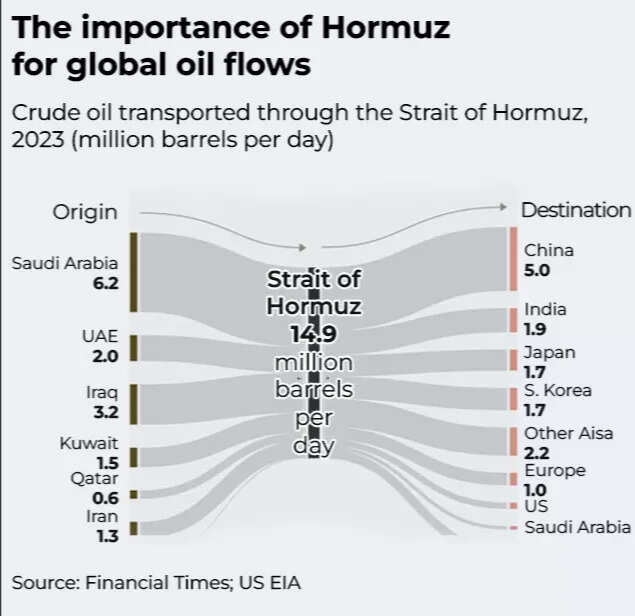
Around one-fifth of the world’s oil consumption passes through the Strait of Hormuz
Sanctions add another thread. Restrictions on Russian oil exports have not stopped China from buying huge volumes of Russian crude, with tankers reportedly carrying around 300 million barrels to Chinese ports in a single year, quietly tying China’s economy to the outcome in Ukraine even though Beijing has fired no shots. North Korea’s role tells a similar story. Pyongyang has sent thousands of troops to fight alongside Russian forces, with reports suggesting around 11,000 soldiers deployed and roughly 4,000 killed, with further deployments reportedly being prepared. In exchange, North Korea has earned an estimated 20 billion US dollars and gained access to Russian military technology, quietly reshaping the balance of power on the Korean peninsula.So, has world war three already begun?There is no single, agreed answer here, and anyone claiming total certainty either way is probably overselling it. No government has declared a third world war, and by the strict historical definition, that matters. There is no formal alliance structure splitting the world’s major powers into two opposing blocs, in the way there was in 1939.Yet the ingredients that historians associate with world wars are undeniably present. Multiple serious conflicts running at once, arms races, proxy warfare, and great powers finding themselves on opposing sides without ever directly fighting each other. Some believe this already adds up to a fragmented, multi theatre version of a world war, not declared and not fought on one continuous front, but a genuine web of connected conflicts all the same. Others point to nuclear deterrence and the deep economic ties between major powers, particularly the US and China, as the reason things have not tipped into direct confrontation, and argue that this restraint is exactly what has kept the last eighty years free of a true global war.Both views have a point. What is harder to argue with is the map itself. Over 50 nations touched, across three continents, by two wars that started for entirely separate reasons. Whether history eventually calls 2026 the quiet beginning of a third world war, or simply one of the most dangerous and interconnected years since 1945, may come down to choices still being made in Kyiv, Tehran, Washington and Moscow. What is already clear is that the idea of a war staying neatly within its own borders belongs to a simpler, older era.