
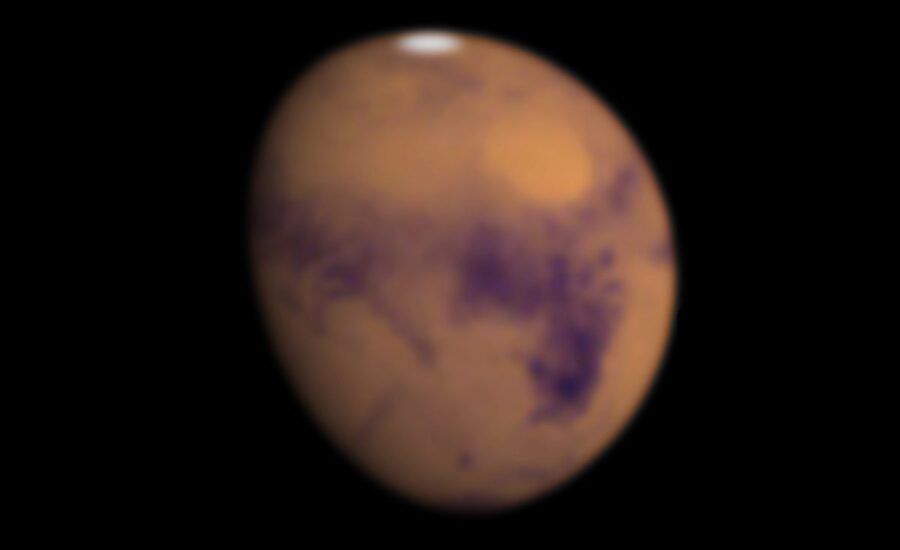
Mars is a morning planet in August 2026, slowly pulling away from the Sun to become a favourable observational target.
At the start of the month, it rises just under four hours before sunrise, appearing to the naked eye like an orange mag. +1.3 star.
On 1 August, through a telescope Mars presents a tiny disc with an apparent diameter of 4.7 arcseconds.
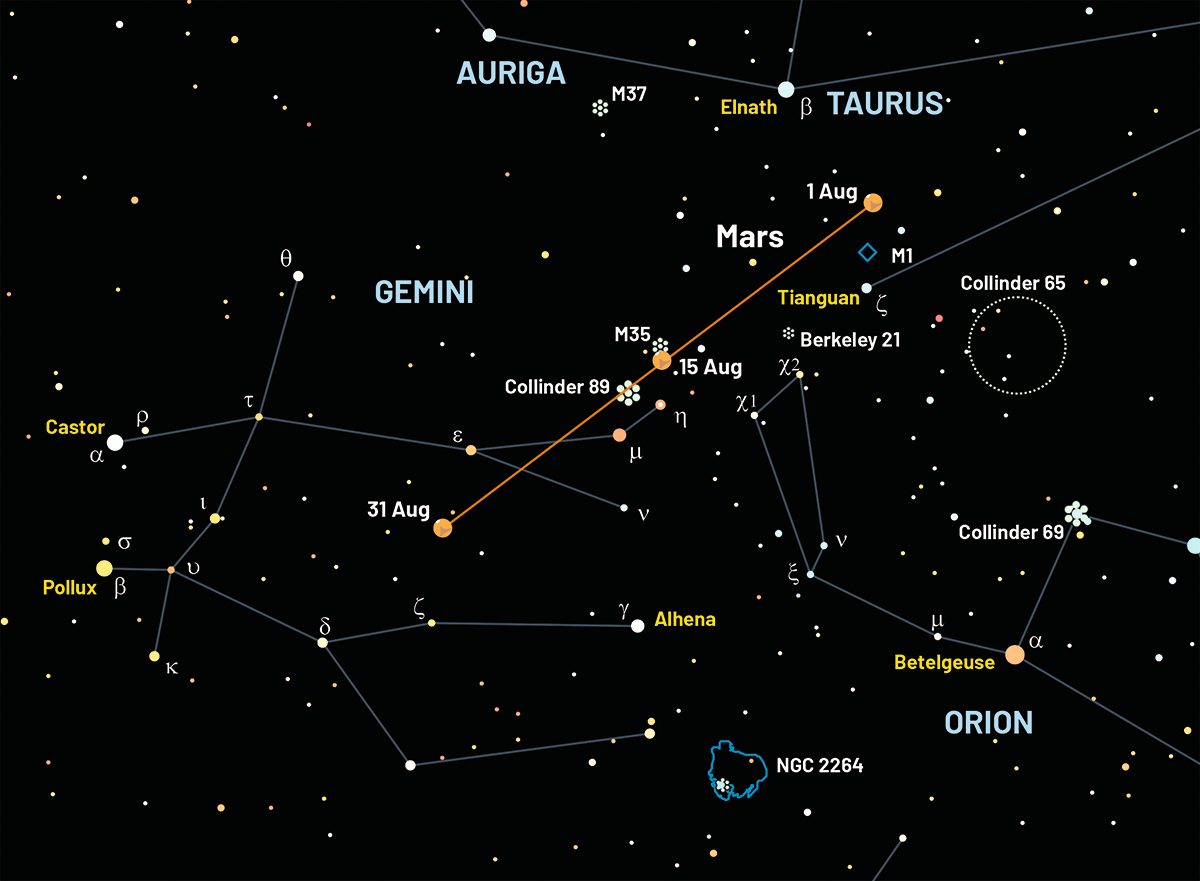
On this date, Mars will be in Taurus between the bull’s horns as marked by mag. +1.6 Elnath (Beta (β) Tauri) and +3.0 Tianguan (Zeta (ζ) Tauri).
On 9 August, a 17%-lit waning crescent Moon sits 3.9° north of Mars, creating a dramatic pairing in the dawn twilight.
At this time, Mars is heading east among the background stars, drifting out of Taurus towards Castor’s foot in Gemini and the mag. +5.5 open cluster M35. By 15 August, Mars will be 0.6° south of M35’s centre.
As the month ends, Mars will begin to rise around 01:00 BST (00:00 UT). Its brightness remains constant at mag. +1.3, but its apparent size does increase slightly to 5.1 arcseconds.
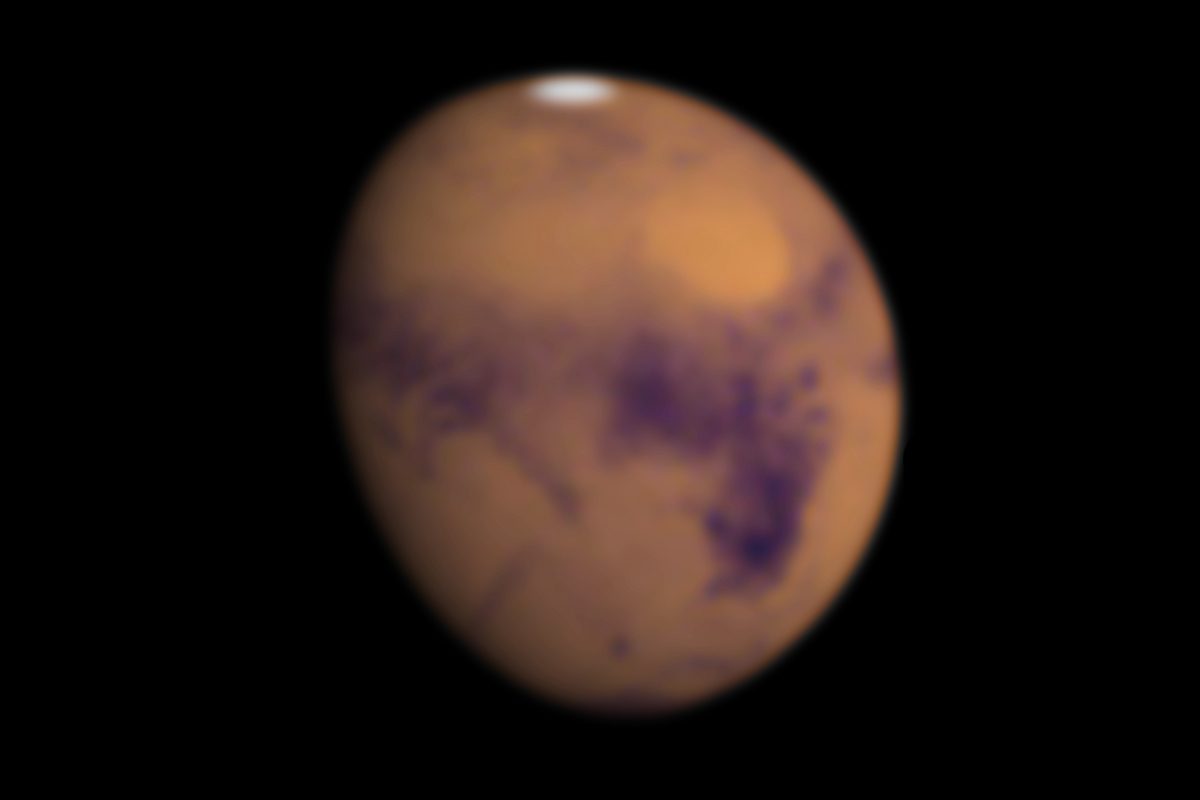
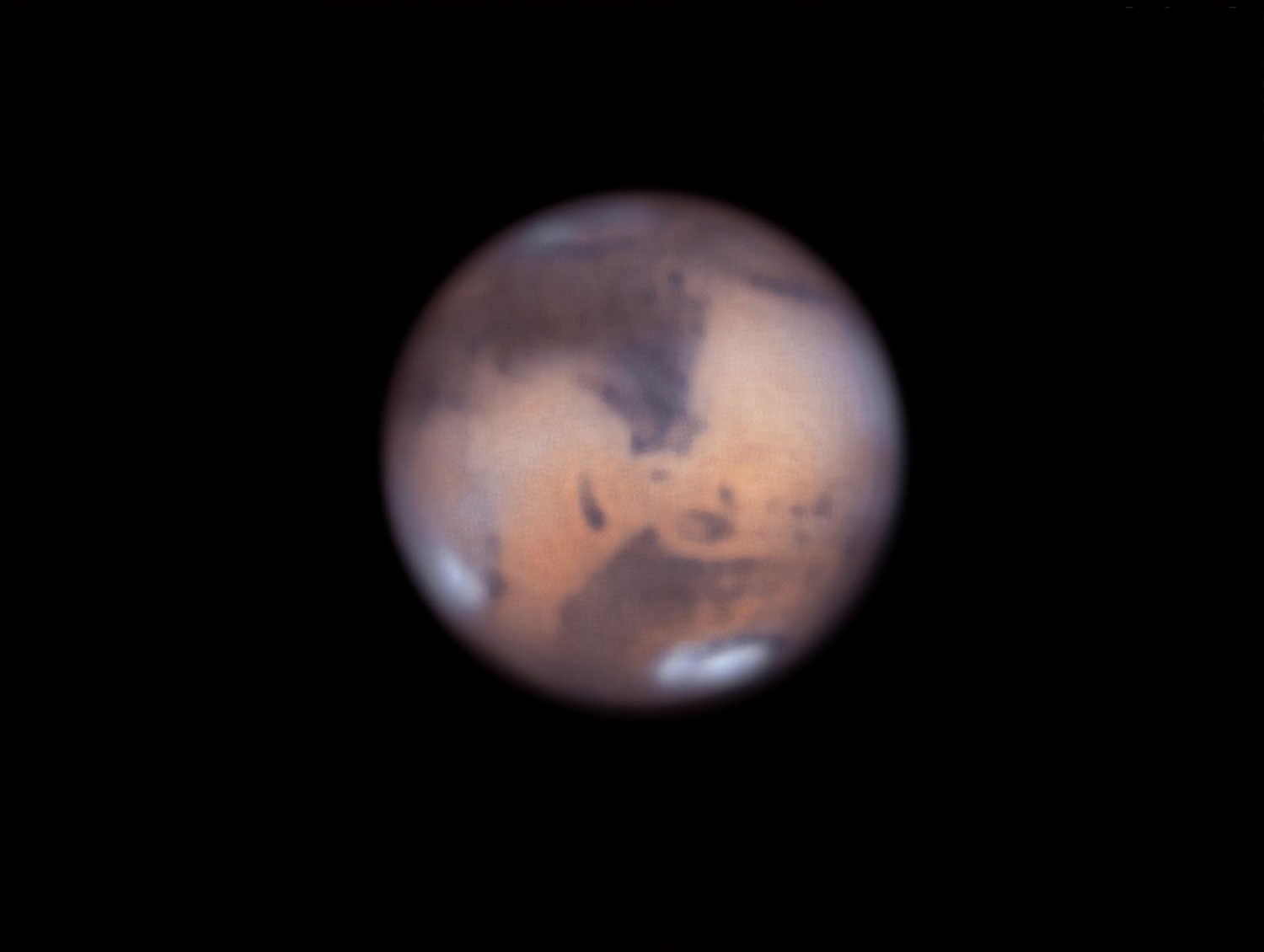
This may still seem tiny, but every increase is welcome as it allows more detail to be seen. At the moment, Mars is tilted to present its northern polar cap towards Earth.
This is a great time to start following Mars as changes begin accelerating ahead of its next opposition.
Its apparent diameter will be:
- 5.1 arcseconds at the start of September
- 5.7 arcseconds at the start of October
- 6.6 arcseconds in November
- 8.0 arcseconds in December
- 10.3 arcseconds in January
- 13.8 arcseconds at opposition on 19 February 2027
Mars August 2026 – at a glance
- Best time to see: 31 August 04:40 BST (03:40 UT)
- Altitude: 27°
- Location: Gemini
- Direction: East
- Features: Surface albedo markings, polar caps
- Recommended equipment: 150mm or larger
Share your observations and photographs of Mars with us by emailing contactus@skyatnightmagazine.com