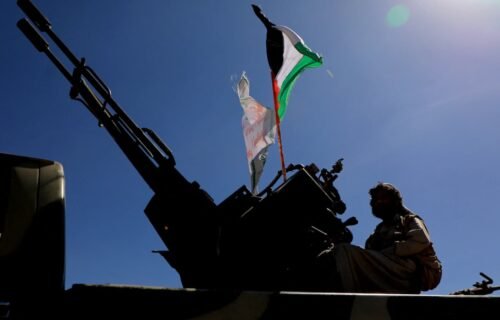
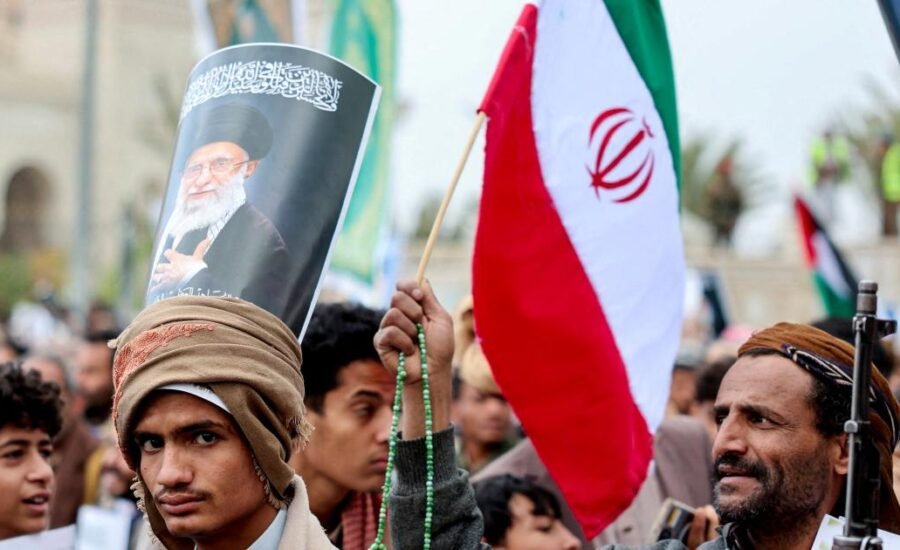
As the United States’ five-month-old war with Iran continues to evolve, Tehran’s ability to continue punishing the United States and its allies has come as a surprise to many strategists and analysts. For months, the United States and Israel have intermittently pummeled the country with air strikes, decapitating much of its senior leadership. Yet Iran and its regional allies have proved remarkably dogged: Hezbollah remains a threat despite Israel’s blistering campaign in southern Lebanon, Iran-backed Iraqi militias have attacked Gulf oil and gas infrastructure, and the Houthis in Yemen have restarted their campaign against commercial ships in the Red Sea.
In fact, the resilience of both the Islamic Republic and its partners despite years of apparent setbacks points to an underlying flaw in the thinking that led to the conflict. In launching the campaign against Iran in late February, the United States and Israel were drawing on a theory pushed by American regime-change advocates and Israeli strategists for years: by targeting the Islamic Republic’s economy, its leadership, weapons facilities, and central supply lines with military force and economic sanctions, Washington could fatally undermine the Iranian regime. In doing so, it would also deal a decisive blow to the regime’s allies. Sever the head of the octopus in Tehran, the theory went, and the axis groups—the octopus’s many arms—would shrivel and die, too.
Two decades ago, a military campaign motivated by the so-called octopus doctrine might have worked. At that point, the relationship between Iran and its allies was less complex, with arms, technology, and know-how all routed through Tehran. But the axis is no longer organized as a simple system with easily identifiable points of failure. Today, it more closely resembles a densely interconnected, self-reproducing web, in which knowledge, resources, and even decision-making can be pooled in many different places at the same time. When a leader is killed, a manufacturing site or warehouse is bombed, or a supply line is cut off, the various groups that are involved adapt, quickly replacing the slain leader, filling in technical knowledge gaps needed to build weapons, and reconstituting supply lines via alternative routes. It is this increasingly sophisticated and flexible structure that has allowed Iran’s allies to adapt in the years since Hamas’s October 7 attacks. Even after Israel’s devastation of Hamas and Hezbollah during the war in Gaza and the collapse of the Assad regime in Syria—and even after the massive U.S.-Israeli air campaign against Iran this spring—the axis has remained largely intact.
As a result, Washington can no longer fall back on its go-to toolkit of escalating political pressure, sanctions, and military strikes. Outright defeat of Iran and the axis groups is likely out of reach, but limiting the threat they pose is still possible. Doing so will require the United States to develop a more comprehensive regional strategy aimed at addressing the complex international military, financial, and knowledge networks that now sustains Iranian power. Washington must now consider containing and potentially striking deals with Iran and its most powerful nonstate allies. And it must do whatever is necessary to limit the spread of the low-cost technology employed in the weapons systems designed by Iran and used by the axis, including engaging with China. This approach may not be satisfying to those American leaders who demand a resounding victory in the Middle East. But it stands a much better chance of success than the current strategy of attacking Iran over and over again and hoping that the Islamic Republic and its network of allies will eventually collapse.
UPSKILLING THE AXIS
Twenty years ago, the groups now known as the “axis of resistance” were mostly local insurgents using the tactics and technology of twentieth-century guerrillas. Under Iran’s tutelage, Hezbollah had emerged as a force in Lebanese politics and a powerful adversary to Israel, whose 2006 invasion it repelled using a stock of rudimentary short-range rockets and Iranian-made drones. Along with Iran, it also offered support to Hamas, which did not yet control Gaza. The Houthis were at the time a small insurgency hiding out in caves in northern Yemen, still a few years away from receiving meaningful support from Tehran. Iranian and Hezbollah operatives had just begun training Iraqi Shiite groups fighting U.S. forces in Iraq, teaching them how to organize insurgent cells, use small arms such as AK-47s and rocket launchers, and build roadside bombs.
In the decades since, Iran’s Islamic Revolutionary Guard Corps (IRGC) has developed a strategy for bringing these and other groups’ capabilities into the twenty-first century. Would-be axis members first receive basic training, both in Iran and, increasingly, territory controlled by other axis groups. Groups that prove themselves on the battlefield are given more advanced weapons, including one-way attack drones that are cruder than the Shahed-136s Iran itself uses but nonetheless able to strike targets far from their headquarters. Since at least 2025, for example, Tehran has provided Islamic Resistance in Iraq groups with a steady supply of the Shahed-101 and Shahed-107 drones used to target U.S. military bases and Gulf state infrastructure over the past six months. A small number of trusted groups are taught to build their own weapons, primarily drones, from parts they import themselves. Today, Hamas, Hezbollah, and the Houthis can all build and field their own one-way attack drones, firing them at targets up to 1,600 miles away.
By carefully honing their organizational capabilities, the IRGC has transformed these groups from cell-based insurgents into highly capable organizations. Hamas, Hezbollah, and the Houthis have assembled their own rosters of smugglers, businesspeople, traders, and engineers to procure and build weaponry. Although these groups may appear to outsiders as only loosely intertwined, they have over time come to perform the functions of the military-industrial bases of rich, powerful states.
Washington can no longer fall back political pressure, sanctions, and military strikes.
The IRGC has also subcontracted training to axis groups. Through this process, the groups have built direct connections to one another and to other powerful state and nonstate actors. In 2010, for example, all documented drone training for Hezbollah took place in Iran and was led by Iranian instructors. By 2015, Hezbollah had begun hosting training courses for other groups, such as Hamas, the Houthis, and Iraqi militias. According to a forthcoming Century International report, as of 2026, the Houthis were teaching the Somali al-Qaeda affiliate al-Shabab how to fly basic drones at training sites in Yemen, and, alongside IRGC operatives, may be tutoring Sudanese Islamist factions on how to build one-way attack drones at sites in Sudan.
For a number of years, IRGC capacity building appeared to be paying off. Between 2011 and 2023, Hezbollah played a growing role in propping up the Iranian-allied Assad regime in Syria’s civil war, building a substantial footprint at military bases across the country alongside the IRGC and enjoying a constant flow of arms and other material support from Iran. Iranian-backed militias in Iraq helped push back the Islamic State (also known as ISIS) in Iraq and Syria and established a powerful presence within the Iraqi state security apparatus. The Houthis seized control of northwestern Yemen, and Hamas’s military and political grip on Gaza strengthened.
Then came October 7. Hamas’s attack on Israel had enormous repercussions for Iran’s allies around the region, and, ultimately, Iran itself. Hamas was decimated, along with much of Gaza, by the Israeli response. In September 2024, Israel launched strikes on Beirut that killed Hezbollah’s secretary-general, Hassan Nasrallah, and much of the organization’s senior command. Later that year, as Iran and Hezbollah decreased their support and focused on their own survival, a rebel offensive caused the collapse of the Assad regime in Syria. Then, during the 12-day war in June 2025, the United States and Israel launched waves of attacks on Iran that leaders in both countries claimed had obliterated the Islamic Republic’s air defenses and its ability to launch missile and drone attacks. Months later, an Israeli strike killed a number of senior Houthi leaders in Yemen, including the top commander of the group’s drone and missile programs. Israeli officials, along with some U.S. officials, were confident that Iran and its regional allies were in terminal decline.
Yet less than a year later, they appear to have reconstituted themselves. Iran launched a huge campaign of drone and missile strikes on Gulf infrastructure and U.S. military installations across the Middle East in response to Operation Epic Fury. Iraqi militias have launched hundreds of drone and missile strikes against U.S. military bases in Iraq and Jordan, along with waves of attacks on the Gulf states. Hezbollah has mounted a stiffer-than-anticipated defense of southern Lebanon after the Israeli ground invasion in March. And a year after the Houthis agreed to end targeting of American commercial ships—a move the Trump administration took as a sign the group had been defeated—they have resumed attacks on vessels passing through the Red Sea, imposing a de facto blockade on Saudi ports along the waterway. They have also targeted Saudi energy infrastructure for the first time since the UN-brokered truce brought the Yemeni civil war to a halt in 2022.
SELF-ASSEMBLY LINE
American and Israeli predictions of Iranian and axis defeat missed an important shift in the way the IRGC and its allies organize their military and organizational capabilities. Whereas military and technological know-how were once concentrated within the IRGC, they have since become embedded across a much more diffuse, interconnected ecosystem. Even in early 2025, after the setbacks in Gaza, Lebanon, and Syria, and after the Trump administration designated the Houthis a foreign terrorist organization, Iran and axis groups were able to quickly rebuild themselves and their arsenals by tapping into the diversified knowledge bases and supply lines they had developed over the last 15 years.
The clearest evidence of that shift is in how several of Iran’s proxy groups now arm themselves. When, in 2024, we started investigating how Houthis arm themselves, American and European officials repeatedly told us that the main source of the group’s arsenal was weapons smuggled from Iran into Yemen on traditional wooden sailing vessels known as dhows. But by that point, the Houthis had already begun building their own weapons, using supply chains as complex as the local and global trade routes that crisscross the Red Sea and the Indian Ocean.
American and Israeli officials had similarly assumed that most of Hezbollah’s arms came from Iran, and that the collapse of the Assad regime would cut off an important weapons supply line. But Hezbollah, like the Houthis, had built alternative supply chains. The 2024 arrest of a Hezbollah operative found to have been using a mass of shell companies in Spain and Germany to re-export drone parts to Lebanon should have sounded alarms in Washington and Israel that the group’s procurement structures were changing: months before the collapse of the Assad regime, the operative was attempting to transport as many as 2,000 engines—enough to reconstitute Hezbollah’s estimated pre-2023 drone fleet.
Iran and its allies still smuggle the old-fashioned way, too.
These new supply lines, in which parts travel separately across the globe and are assembled near the point of use, are also useful in neutralizing another important U.S. strategy for countering Iran and its proxies: sanctions and terrorism designations, which threaten punitive action against individuals suspected of working with designated groups. At the turn of this century, these tools were useful for combating arms proliferation because the United States and its allies controlled most of the exports, trade routes, and financial networks needed to buy and move arms and advanced manufactured goods.
Until the mid-2010s, the United States and its allies were able to throttle Iran’s drone program by targeting individuals and companies suspected of supplying parts to Tehran. In 2009, for example, German authorities arrested a group of Iranian businessmen who were trying to ship drone engines to Iran by claiming they were Jet Ski engines. But Chinese manufacturers now produce the intermediate goods needed to build drones at increasing scale and shrinking cost. China does not restrict the sale of many of the parts used to make weaponized drones because, Beijing claims, they are made for civilian use. In many cases, it refuses to take its own punitive measures against Chinese firms that have been sanctioned by the United States for selling them for this reason. Today, Chinese and Iranian copies of those purported Jet Ski engines are powering the Russian and Iranian drone campaigns in Ukraine and the Middle East.
Using Chinese commercial websites such as Alibaba, Iran and axis groups can build the Ababil-T, historically the workhorse drone of the axis fleet, from readily available Chinese-origin parts for about $1,500. All Hezbollah needs to obtain and retrofit the first-person drones it has been using to target the Israel Defense Forces since early 2026 is a credit card, access to YouTube instructional videos, and a bit of manufacturing acumen.
The chokepoints that matter for drone proliferation are not under U.S. control.
The sheer volume of global trade makes it nearly impossible for even well-resourced states to track these shipments from China. In most cases, parts are bought by anonymous shell companies, often registered in so-called secrecy jurisdictions—places where local laws allow companies to be incorporated without publicly disclosing their ownership structures—and transported in some of the five million to six million shipping containers that navigate the high seas daily. The containers are dropped off and collected at trade hubs that prioritize ease of doing business over screening cargo or sanctions compliance. When shell companies are sanctioned, their owners simply shut them down and register new ones.
Iran and its allies still smuggle the old-fashioned way, too. Tehran has a long track record of shipping arms to allied groups by sea, both through smugglers in small boats and with its own fleet of container ships. More recently, it has worked with a tangle of dodgy international businessmen to build a “shadow fleet” of vessels even harder for Western authorities to track. For example, one network of cargo ships regularly switches off its on-board automatic identification systems in the Gulf of Oman before going on so-called dark runs to the Iranian port of Shahid Rajaee, turning the systems back on only after the ships have cleared the Strait of Hormuz. Many of these ships transported unidentified cargo to Syria before the collapse of the Assad regime and continue to carry shipments to Houthi-controlled ports in Yemen. The ships are connected, through shell companies, to a single Syrian businessman who has been repeatedly sanctioned for moving oil and money for Iran and Hezbollah.
Iranian state-owned ships, meanwhile, have recently returned to the Mediterranean after avoiding the region between 2023 and 2025, docking regularly at Libyan ports. Israeli and Libyan researchers have concluded that Iranian materiel is now being transported from Libya to Tehran’s allies in Lebanon, Sudan, and potentially Gaza. And even under the new Shara government in Syria, which has pledged to prevent arms transfers, cross-border smuggling into Lebanon is still happening via Syrian roads and ports. Put together, these continually evolving supply lines and relationships have helped transform Iran’s network of regional allies into a complex and highly adaptive web of actors.
DEAL WITH IT
The new reality of the axis requires a new strategy. A more promising approach to blunting the threat posed by Iran and its allies must first acknowledge that relying on military force and economic warfare alone will only lead to repeated cycles of conflict that could drag the United States into yet another open-ended war in the Middle East.
Washington should instead prioritize some combination of continued disruption of axis commercial and financial networks, splitting from the axis groups not yet fully embedded in the ecosystem, such as the groups in the Horn of Africa the Houthis are recruiting, and engaging politically with more established groups, particularly as they take on governance in the territory they hold. Deals would not necessarily resemble bilateral agreements like the U.S.-Houthi truce. Instead, they should take the form of structured agreements, aimed at brokering lasting country-level political settlements across the region, accompanied by U.S.-Iranian diplomacy.
Alternatively, Washington could throw caution to the wind and adopt the IRGC’s playbook, building its own array of state and nonstate actors to fight against the axis on the United States’ behalf. But training groups to develop and use their own weapons would be an arduous undertaking, and it would come with serious risks. Given the United States’ spotty record building up allied states’ conventional forces and its tendency to discard state and nonstate allies as soon as they no longer serve Washington’s purposes, attempting to do so again could have catastrophic consequences.
However it decides to deal with the axis, Washington will struggle to rein in the spread of advanced weapons that can be built from commercially available parts on its own. The United States may still be the world’s most advanced economy but the chokepoints that matter for drone proliferation are not under its control. China, for now, has little reason to help Washington curb purchases of drone parts by armed groups. But Beijing is worried about the threat drones pose to its own domestic security, and entrepôts such as the United Arab Emirates that have long looked the other way may be changing their own thinking after weathering waves of Shahed-136s earlier this year. A multilateral initiative to improve tracking of dual-use components and agreed-on penalties for their transfer to nonstate armed groups could constrain armed groups’ ability to build large drone arsenals in the future.
The right approach will combine all these efforts, eschewing the sort of totalizing theory of the case that has failed in the past. What Washington cannot do is turn back time. Hoping for the collapse of Iran and its allies around the region will not be enough to destroy this still potent network. New ideas are needed.
Loading…