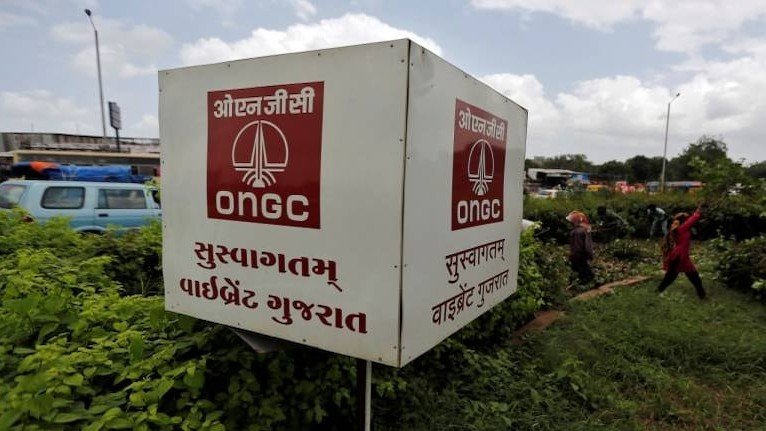
India’s Oil and Natural Gas Corporation more than doubled its quarterly profit as higher crude and natural gas prices—and a weaker rupee—more than made up for another drop in production.
ONGC reported net income of 170.34 billion rupees, or about $1.8 billion, for the quarter ended June, beating the 152.67 billion-rupee average estimate compiled by Bloomberg. Revenue jumped 45% from a year earlier to 464.60 billion rupees.
The numbers put ONGC alongside the global oil majors that spent the second quarter cashing in on the biggest oil supply disruption in history. Brent averaged nearly 50% above year-ago levels as the U.S.-Iran war throttled Persian Gulf flows and tightened crude and fuel markets.
ONGC earned 50.4% more on every barrel of crude it sold compared with a year earlier. Earnings from gas produced at legacy fields rose 5.4%, while earnings from newer deepwater acreage jumped 61.5%.
That price windfall mattered because production did not cooperate. ONGC’s standalone oil and gas output fell 3.4% to 9.4 million metric tons of oil equivalent as aging fields continued to decline and newer projects were slow to make up the difference.
The company supplies about two-thirds of India’s oil and more than half of its gas, making it central to New Delhi’s effort to reduce import dependence. India still imports nearly 90% of the oil it consumes and about half its gas. When the Middle East war disrupted crude and cooking-fuel supplies, it became clear what a vulnerability that was.
India has leaned harder on Russia to fill the gap. Russian crude imports hit a record 2.8 million barrels per day in July, accounting for 55.5% of total imports.
ONGC is also being asked to spend more. The company plans to build a 13-million-barrel storage facility at Mangaluru, with half reserved for strategic stocks. India’s existing strategic reserves cover only about eight days of demand.
It’s quite convenient for India, really. ONGC’s falling production is exactly why India needs more exploration, while the war-driven price spike is giving the company the cash to fund it.
By Julianne Geiger for Oilprice.com