It turns out the rotten food and discarded wood sitting in municipal landfills could be transformed into high-tech shields against agricultural pests.
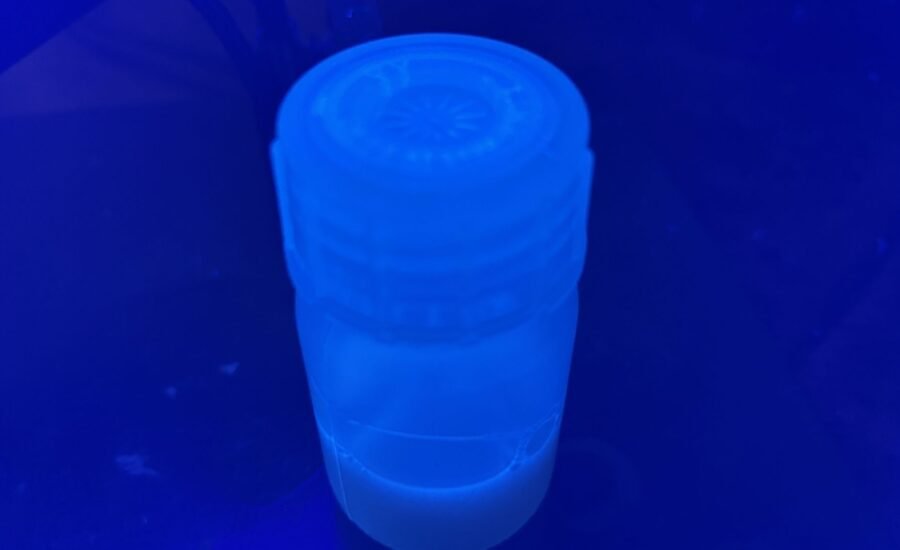
Japanese green technology startup Green Science Alliance announced that it has synthesized “carbon quantum dots” from organic biomass waste like wood and food. Interestingly, the quantum dot functioned as an effective pest repellent against adult sweet potato whiteflies (Bemisia tabaci).
This is believed to be the world’s first instance of carbon quantum dots demonstrating insect-repellent properties.
“It could be the first time in the world to find repellent effect of carbon quantum dot according to their survey,” the team noted.
Nanotech repellent
Quantum dots are minuscule, man-made semiconductor particles measuring between 1 and 9 nanometers in diameter. Often dubbed “artificial atoms,” these nanoscale structures exhibit unique electronic and optical properties due to a phenomenon called quantum confinement.
Typically, these dots are used in advanced solar cells, bio-imaging, and ultra-high-definition displays. Using them to scare off farm bugs pushes nanotechnology into completely uncharted territory.
Throughout history, humans and livestock have suffered from a wide variety of destructive insect pests that threaten public health, food supplies, and property. Biting insects like mosquitoes and blackflies transmit disease, while cockroaches, weevils, and mites contaminate food stores.
Meanwhile, pests like moths, beetles, and termites inflict severe physical damage on textiles, furniture, and wooden buildings, forcing humanity to continuously develop targeted prevention and extermination measures.
Crop-destroying pests are usually handled using chemical insecticides like organophosphates and pyrethroids that kill insects outright but inflict high environmental and health costs.
Apart from polluting ecosystems and leaving toxic residues on human food sources, these aggressive chemicals drive pests to develop genetic resistance, rendering treatments ineffective over time. Even milder synthetic alternatives like DEET are increasingly restricted worldwide due to health risks, creating an urgent need for safer, more sustainable pest management solutions.
Alternative ingredients like terpenes, cinnamaldehyde, and p-menthane-3,8-diol offer viable options. But the precise relationship between chemical structure and repellent performance remains poorly understood, underscoring the need for continued research.
This new biomass-derived repellent offers a cleaner alternative.
Mysterious working
Curiously, the exact mechanism behind why these eco-friendly quantum dots scare off insects remains a mystery, even to their creator. Dr. Ryohei Mori has proposed three primary theories.
The microscopic particles are small enough to pass through insect cell membranes and nuclear walls, damaging DNA and triggering an avoidance response.
Then there could be optical disruption in which the quantum dots emit specific wavelengths of light under ambient conditions that insects instinctively dislike. And lastly, when exposed to natural sunlight, the particles generate free electrons via photocatalysis, producing localized energy disruptions that irritate pests.
Using free waste materials alongside commercially scalable production processes makes this cutting-edge nanotechnology much cheaper to manufacture than conventional repellents.
In addition, as a naturally derived and eco-friendly alternative, these innovative quantum dots offer a potentially much safer option than petroleum-derived synthetic chemicals. However, formal safety testing remains an ongoing priority.
At present, the research is just a stepping stone, and rigorous safety and environmental testing remain necessary before commercial release. Green Science Alliance plans to expand production using various biomass waste feeds and evaluate efficacy against a broader array of agricultural pests.