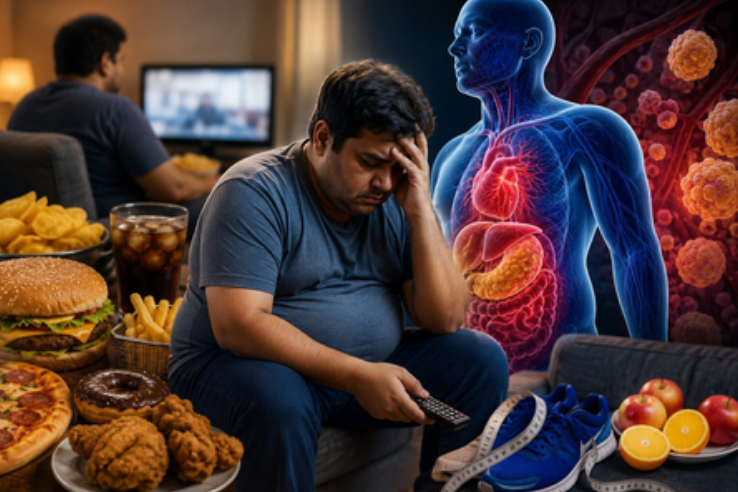
Hyderabad — India is facing a growing metabolic health crisis as processed foods, physical inactivity and chronic stress contribute to rising rates of obesity, fatty liver disease and diabetes, according to a leading gastroenterologist.
Dr. Kalapala, Consultant Gastroenterologist and Director of the Center for Obesity and Metabolic Therapy at AIG Hospitals, said obesity should be treated as a complex disease that can affect nearly every organ rather than as an isolated weight problem.
He said modern diets increasingly rely on foods high in refined carbohydrates, unhealthy fats and sugar while offering little protein or nutritional value. Such foods can also delay feelings of fullness, encouraging people to eat more.
“The processed food itself will increase cravings because of delayed satiety,” Kalapala said. “Once you consume these foods, which have high carbs, high fats, and that too bad fats with no proteins, this will take a toll on the metabolic health of the body, leading to weight gain, fatty liver, diabetes, and other systemic involvement.”
Kalapala, who serves as Vice Chair of American Bariatric Endoscopy and is a fellow of American, European and Japanese endoscopy societies, said metabolic disorders are increasingly affecting people who do not drink alcohol or smoke.
Vegetarians and others who may otherwise consider themselves healthy can still develop serious metabolic problems because of poor diet, stress and a lack of physical activity, he said.
“Because of this food change, sedentary lifestyle, and widespread stress, it leads to metabolic changes, mainly fatty liver,” Kalapala said.
Fatty liver disease can progress without obvious symptoms and may only be discovered during an ultrasound examination or through abnormal liver function tests.
“The liver, when it contains fat, remains silent until detected through ultrasound or liver function tests,” he said. “By the time a person knows, the liver is already damaged.”
Stress can further worsen metabolic health by increasing food cravings and reducing motivation to exercise, Kalapala said. He pointed to the connection between the brain and digestive system as one reason emotional strain can influence eating behavior.
“Stress is something which will precipitate and make people crave more and eat more,” he said.
The problem is also becoming increasingly visible among children. Kalapala cited studies by the Indian Council of Medical Research and the National Family Health Survey showing childhood obesity rates of about 15% to 18% in India.
He said the risk can begin before birth, particularly when a mother is overweight during pregnancy.
“If the mother is overweight during pregnancy, the same thing transmits to the fetus, and then the child who is born—from then itself childhood obesity starts,” he said.
Limited access to playgrounds, reduced physical activity and growing academic pressure can compound the problem as children enter adolescence, he added. (Source: IANS)