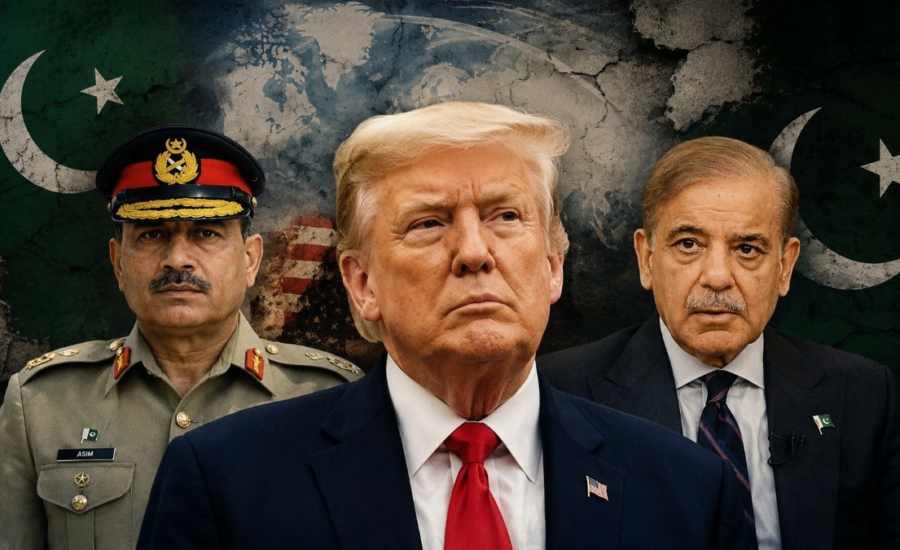
Diplomacy often reveals itself not through what is said, but through what is left unsaid. As Washington spoke of a narrowing window for peace with Iran, one country conspicuously disappeared from US President Donald Trump’s list of peacemakers. However, Tehran continued to insist that it remains the key bridge between the two sides.
The contrasting messages from Washington and Tehran have once again thrust Pakistan’s role in the US-Iran conflict into focus. While Trump, speaking at the White House on Monday (August 3), credited Saudi Arabia, the United Arab Emirates and Qatar for backing efforts to revive negotiations with Iran, he made no mention of Pakistan, the country that Tehran only a day earlier (August 2) had described as its principal mediator with the United States.
“We are talking right now. We’re talking at the request of Iran, backed by Saudi Arabia, the UAE, backed by Qatar in particular,” Trump said, adding that several world leaders had urged him to offer Tehran “one last chance” to sign an agreement.
“They said, ‘Why don’t you give this a last chance?’ This is the last chance for them to sign,” the US President said on Monday.
PAKISTAN TRIES TO REMAIN MEDIATOR; INVITES IRANIAN LEADERS
Trump’s remarks couldn’t be ignored for two reasons. First, they contradicted Tehran’s public position that no fresh negotiations with Washington were currently underway. Second, they omitted Pakistan altogether, despite Islamabad having spent months projecting itself as the principal intermediary between the two warring nations.
If Washington appeared to ignore Pakistan’s role, Islamabad and Tehran sought to reinforce it almost immediately.
On Monday, Pakistan invited Iranian Foreign Minister Abbas Araghchi and Iran’s Parliament Speaker and chief negotiator with Washington Mohammad Bagher Ghalibaf for urgent consultations on regional developments, signalling that diplomatic engagement between the two countries remains active despite Trump’s remarks.
Pakistan’s Foreign Office said in a post on X that Deputy Prime Minister and Foreign Minister Ishaq Dar spoke with Araghchi, with both leaders exchanging views on regional and international developments before Dar invited his Iranian counterpart to visit Pakistan at the earliest opportunity.
According to Pakistan’s Dawn newspaper, Pakistan National Assembly Speaker Ayaz Sadiq also extended an invitation to Ghalibaf, who also serves as one of Iran’s key political interlocutors in dealings with Washington.
Quoting diplomatic sources, the Karachi-based newspaper reported on Monday that both Iranian leaders were requested to travel to Islamabad as soon as possible for consultations, although no travel dates have been announced.
US SNUBS, BUT IRAN BACKS PAKISTAN AS MEDIATOR
The invitations came just hours after Tehran once again publicly asserted Pakistan’s central role in mediation efforts.
Iranian Foreign Ministry spokesperson Esmaeil Baghaei dismissed suggestions that new countries had entered the mediation process.
“Pakistan is a mediator in issues related to Iran and the US. Qatar also helps in cases where necessary,” Baghaei said on Monday, adding that while China had played a role in preventing further escalation, “there is no new mediator in the talks”.
The remarks effectively reaffirmed Tehran’s position that Pakistan remains its primary diplomatic channel with Washington, even as Trump chose to highlight Gulf allies instead of the Islamic Republic.
Pakistan’s claim to that role is rooted in months of behind-the-scenes diplomacy.
HOW PAKISTAN BUILT ITS MEDIATOR IMAGE
Since the conflict erupted in late February, Islamabad has relayed multiple messages between Washington and Tehran. By late March, Pakistan had facilitated at least half a dozen exchanges between the two sides before helping broker an April ceasefire.
It subsequently hosted US-Iran negotiations in Islamabad, which culminated in a June memorandum of understanding (MoU) jointly mediated by Pakistan and Qatar, giving both sides 60 days to negotiate a permanent settlement.
Although that agreement later collapsed and fighting resumed, Pakistan reportedly remained engaged through back channels. Along with Qatar, it proposed another ceasefire plan during a nearly two-week escalation and later joined a China-backed effort to revive negotiations and prevent disruptions in the strategically vital Strait of Hormuz.
Yet Trump’s omission raises questions over whether Washington views Pakistan’s role as central to the current phase of diplomacy.
For Islamabad, however, stepping back is not an option.
By inviting both Araghchi and Ghalibaf for urgent consultations immediately after Trump’s remarks, Pakistan appears keen to remain as a mediator.
For now, the diplomatic messaging remains divided on the mediation claims. The White House has chosen to spotlight Gulf partners. Tehran continues to describe Pakistan as its principal intermediary. And Islamabad, through fresh invitations and renewed engagement, appears determined to ensure that it remains at the centre of any future negotiations, even if its name was missing from Trump’s list.
– Ends