Planet Earth has recorded its lowest temperature in 14 years as a remote spot hit a bone-chilling -84C.
Antarctica’s Concordia research station witnessed icy temperatures take the staggering plunge on July 18 – while the UK and western Europe were experiencing scorching temperatures.
Raw data shared with LiveScience shows the mercury hit that extreme low twice during the night, at 6.25am and then again at 6.34am local time.
The last time Earth experienced anything colder was in 2012, when Russia’s Vostok Station in East Antarctica registered -84.2C (-119.6F).
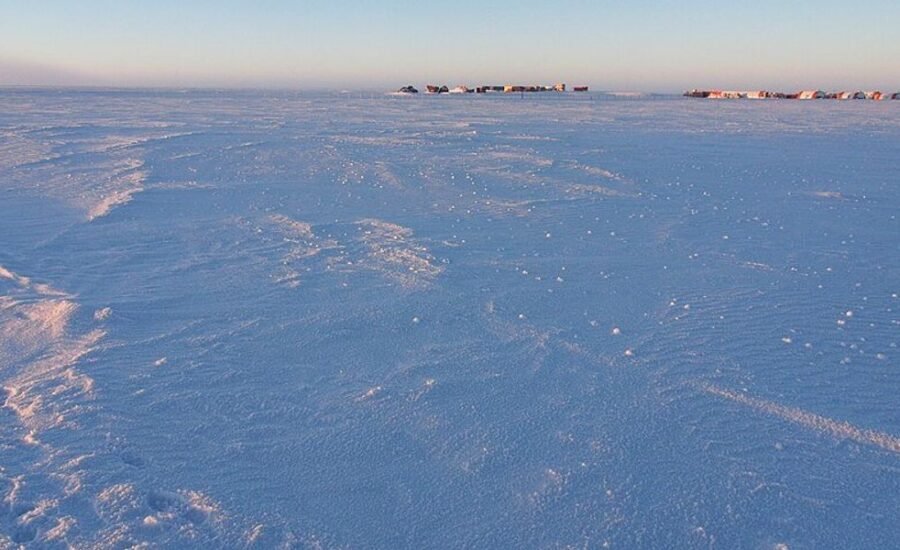
Concordia sits 10,500 feet above sea level atop a vast ice cap, roughly 600 miles from the nearest coastline.
Perched high on the Antarctic Plateau, Concordia ranks among the most isolated human outposts on the planet.
Its pristine surroundings make it ideal for studying the atmosphere and outer space.
Winter temperatures at the station routinely dip below -80C (-112F), but this latest figure is still well below the seasonal average.

Antarctica’s Concordia research station witnessed icy temperatures plummet
|
WIKIMEDIA COMMONS
During winter, no aircraft can reach the station, and the closest neighbours at Vostok Station are more than 370 miles away.
Gabriele Carugati, who leads the station for Italy’s National Antarctic Research Program, told Live Science that this shows “how variable Antarctic weather can still be”.
He said: “Even here, where extreme cold is expected, temperatures below -84C are remarkable.”
The crew is technically more cut off than astronauts aboard the International Space Station, which orbits just 250 miles above Earth.
Mr Carugati says: ‘During winter, there is no sunlight for months, the atmosphere is extremely dry and stable, and under clear skies, heat continuously escapes to space because there are no clouds, allowing temperatures to fall to extraordinary levels.’
The coldest temperature ever logged at Concordia was -84.7C (-120.5F), recorded during the winter of 2010, according to the Italian Antarctic MeteoClimatological Observatory.

The station is extremely remote
|
WIKIMEDIA COMMONS
The all-time global record, however, belongs to Russia’s Vostok weather station, where the mercury fell to -89.2C (-128.6F) in July 1983.
Research indicates conditions could get even more extreme, with satellite data suggesting temperatures in East Antarctica might reach as low as -98C (-144F).
Mr Carugati said: “Climate change describes the longterm global trends, while individual weather events can still [bring] exceptional cold.
“Antarctica is influenced by complex atmospheric processes, so an extreme low temperature at one location does not contradict the broader picture of global warming.”
These ultra-cold extremes tend to form in shallow dips near the ice sheet’s highest point, at roughly 13,290 feet above sea level.
Scientists believe this represents the natural lower limit for air temperature on Earth, even under perfect conditions.
But temperatures across the rest of the world are remarkably different. Western Europe logged its hottest June on record, and wildfires driven by scorching, dry conditions have swept through Canada, France, Spain, and Greece.
Even Antarctica has seen unusual warmth — Argentina’s Esperanza base on the Trinity Peninsula recently recorded its warmest ever winter temperature at 15.4C (59.7F).
Last March, a heatwave pushed Concordia’s thermometer to -9.4C (15.1F), roughly 18C warmer than the same period the year before.