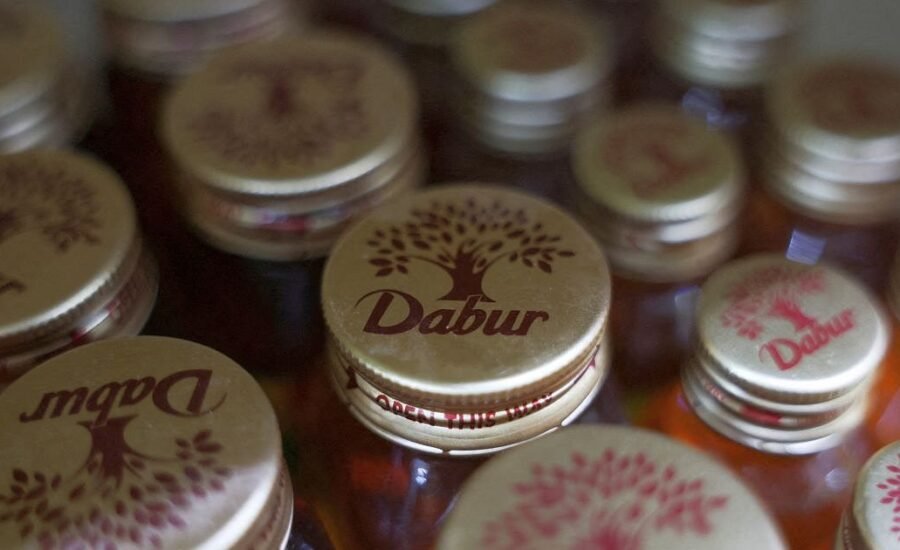
The FSSAI has issued a prohibition order to Dabur India, banning the use of ‘100 per cent’ claims on products like honey, cow ghee, and edible oils, citing that such labelling is misleading and violates food safety regulations.

IMAGE: A generic image representing food products and regulations. Photograph: PTI
Key Points
- The FSSAI has issued a prohibition order to Dabur India Ltd for using misleading ‘100 per cent’ claims on various food products, including honey, apple cider vinegar, and cow ghee.
- The regulator stated that claims such as ‘100 per cent Natural’, ‘100 per cent Pure’, and ‘100 per cent Organic’ are ambiguous, unverifiable, and likely to mislead consumers, violating FSS (Advertising & Claims) Regulations, 2018.
- Dabur Himalayan Organic Apple Cider Vinegar and Dabur Organic Honey were found displaying the Jaivik Bharat Logo without valid FSSAI organic endorsement.
- Dabur Hommade Coconut Milk was marketed with a ‘100 per cent Purity’ claim, which is not permissible for compound foods under the FSS (Advertising & Claims) Regulations, 2018.
- Dabur India has been directed to immediately stop selling all products with misleading ‘100 per cent’ claims and submit an Action Taken Report within 15 days.
Food regulator, the Food Safety and Standards Authority of India (FSSAI), has prohibited Dabur India from selling many products such as honey, cow ghee, and edible oils using ‘100 per cent’ claims, saying that such labelling is against the law.
In a social media post on Monday, the FSSAI informed that it has issued a prohibition order to Dabur India Ltd over the sales of food products carrying misleading ‘100 per cent’ claims, including honey, apple cider vinegar, virgin coconut oil, sesame oil, cow ghee, coconut water, coconut milk and other such items.
FSSAI’s Stance on Misleading Claims
Giving details about the violations, the FSSAI said that “food products being sold on the company’s website were found carrying misleading ‘100 per cent’ claims such as ‘100 per cent Natural’, ‘100 per cent Pure’, ‘100 per cent Purity Guaranteed’, ‘100 per cent Organic’ and ‘100 per cent Tender Coconut Water’.”
The regulator asserted that the use of the 100 per cent claims is in contravention of the FSS (Advertising & Claims) Regulations, 2018, as they are ambiguous, unverifiable and likely to mislead consumers.
“We have received the FSSAI notice and are in the process of checking the content mentioned in the notice on our website,” Dabur India said in a statement.
Specific Violations Identified
Dabur Himalayan Organic Apple Cider Vinegar and Dabur Organic Honey were found displaying the Jaivik Bharat Logo without valid FSSAI organic endorsement. Moreover, the product Dabur Hommade Coconut Milk was marketed with the claim “100 per cent Purity”. Such a claim is not permissible for compound foods under the FSS (Advertising & Claims) Regulations, 2018.
The FSSAI said that it had issued notice to Dabur earlier, directing discontinuation of misleading “100 per cent” claims. However, no satisfactory corrective action was taken by Dabur.
Regulatory Action and Future Steps
“FSSAI directed Dabur India Limited to immediately prohibit the sale of the food products identified in the notice and all other food products carrying misleading “100%” claims, and to submit an Action Taken Report (ATR) within 15 days,” the regulator said.
In the last few months, the FSSAI has been using social media to inform the public at large about its enforcement actions against various food business operators, as well as e-commerce companies selling these products on their online marketplaces. Many alcoholic beverage makers and energy drink manufacturers have come under its radar.