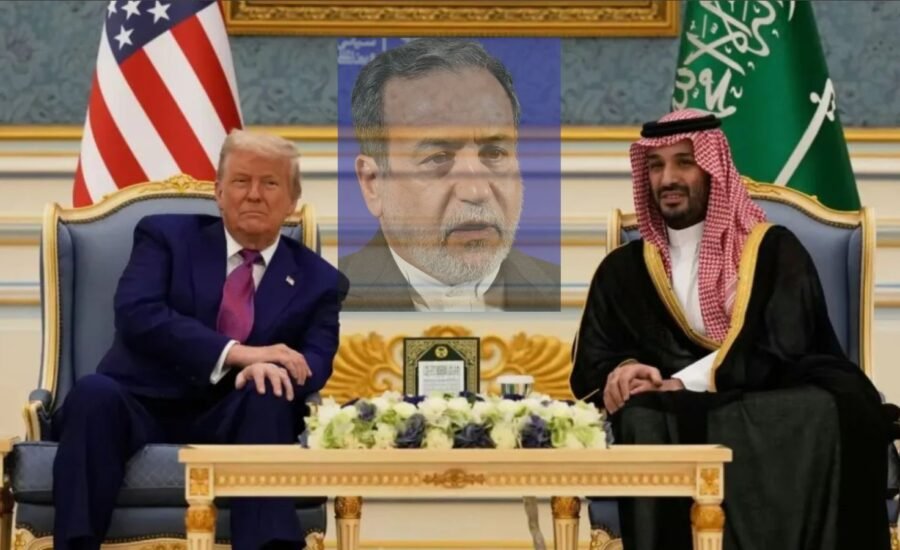
Saudi Crown Prince Mohammed bin Salman (MBS) has urged US President Donald Trump to avoid launching massive new strikes against Iran, amid growing fears in the Gulf that the conflict could spiral into a broader regional war and put critical energy infrastructure at risk, Axios reported.
The intervention came as Trump said he would halt planned attacks after mediators reached the broad parameters of a potential agreement to end the five-month-long conflict, though US and regional officials cautioned that no final deal has been reached and negotiations remain ongoing.
According to Axios, MBS spoke to Trump by phone on Saturday and raised concerns over Washington’s plans for large-scale strikes on Iranian energy targets, which the US president has been weighing in response to Iran’s missile attack on a US base in Jordan and repeated disruptions to shipping through the Strait of Hormuz.
Citing two US officials and another source familiar with the conversation, Axios reported that the Saudi crown prince sought clarity on Trump’s military plans and urged him to pursue de-escalation instead of a wider offensive.
“The Saudis expressed concern and asked for clarity about the plan of action,” one US official told Axios.
A second source familiar with the call said MBS specifically urged Trump not to proceed with the strikes.
Neither the White House nor the Saudi Embassy in Washington commented on the Axios report.
Story continues below this ad
The phone call followed a meeting earlier this week between Trump and Saudi Defence Minister Prince Khalid bin Salman (KBS), who reportedly conveyed Riyadh’s preference for de-escalation during separate meetings with Vice President JD Vance and other US officials.
According to Axios, Saudi Arabia has played a significant behind-the-scenes role in shaping Trump’s Iran policy throughout the conflict despite occasional disagreements between Washington and Riyadh.
.
World · Middle East · Explainer
Inside the Trump–MBS call: the diplomacy behind the pause on Iran
Saudi Crown Prince Mohammed bin Salman urged Donald Trump to hold off large new strikes on Iran, reports say. Hours later, Trump paused the attacks — citing the “parameters of a deal.” Iran disputes his account.
.Developing · Aug 2, 2026
What happened
Axios first reported — with CBS corroborating — that MBS spoke with Trump on Saturday, voiced concern over his plans for large new strikes on Iran, and urged de-escalation, asking for clarity on the plan. The White House and Saudi embassy declined to comment.
Hours later, Trump said on Truth Social the US would hold off new strikes, claiming Mideast allies had reached the “parameters of a deal” that would include the “Immediate, Complete, and Total OPENING OF THE HORMUZ STRAIT, and an end to Iran’s nuclear threat.” He said the US was “locked and loaded” but agreed to cancel “subject to… rapidly mak[ing] a DEAL,” and that Israel joined him.
The dispute
Trump says
Iran and other countries asked the US to hold off, as a deal’s outline was agreed.
Iran says
It made no such request — calling the claim “a new lie” — and denies direct negotiations; its forces are “on high alert.”
The call was reported via anonymous sources (Axios, CBS); it has not been confirmed on the record. A five-month war; Trump had been weighing strikes on Iranian energy targets.
Who’s talking to whom
United States
Trump · envoy Steve Witkoff
.
.
.
.
.
Oman · lead mediatorQatar
Saudi · MBS
Called Trump directly; urged restraint and de-escalation.
Oman
Lead mediator — presented Iran a plan for the Strait of Hormuz.
Qatar
Held talks with Iran’s Araghchi, US envoy Witkoff and Omani officials.
Turkey & Pakistan
Pressing Iran and the US to de-escalate.
UAE
Among Gulf states pressing both sides to step back.
Diplomatic contacts per Axios, CBS and CNBC. Iran’s FM Araghchi also spoke with the Saudi and Omani foreign ministers.
Why Saudi Arabia wanted restraint
1
Retaliation on Gulf oil — Iran has threatened to hit energy and infrastructure in Israel and the Gulf if attacked.
2
The Strait of Hormuz — already disrupted; a wider war could choke it entirely.
3
Higher oil prices and a hit to global energy supplies.
4
A wider Gulf war drawing in Saudi Arabia and its neighbours.
5
Global shipping disruption across the Gulf and the Red Sea.
Riyadh has influenced Trump’s Iran policy at several points in the five-month war (Axios).
The emerging deal — as each side frames it
What Trump says it includes
US holds off new strikes
Full opening of the Strait of Hormuz
An end to Iran’s nuclear threat
Israel joins the commitment
Iran’s position
Denies asking the US to hold off
Denies direct negotiations
Forces “on high alert”
Rejects US-imposed Hormuz tolls
Status: no final deal — Trump’s stated “parameters,” contested by Tehran
Oman reportedly proposed “voluntary” Hormuz fees (Reuters); Trump and Gulf allies rejected Iran-imposed tolls. Terms are Trump’s framing and not independently confirmed.
Why the Strait of Hormuz matters
~20%
of the world’s oil trade passes through the strait — roughly a fifth of global supply
.A major route for LNG and crude from Gulf exporters.
.Saudi Arabia, the UAE, Qatar, Kuwait, Iraq and Iran depend on it to ship energy.
.It is currently disrupted amid the war — a key trigger for the crisis.
.Any closure spikes oil prices and rattles global markets and shipping.
The ~20% share is a widely cited estimate (US EIA). India, a major Gulf-oil importer, is among the economies most exposed to disruption.
What’s next
.
No final deal yet — Trump’s pause is “subject to rapidly making a deal.”
.
Mediation continues via Oman and Qatar; Iran denies direct US talks.
.
The Gulf stays on high alert; the Strait of Hormuz remains disrupted.
.
A fragile pattern: this war has paused before, only for strikes to resume when talks stalled.
A developing, contested story; claims on both sides should be reconfirmed against the latest wire before publish.
Sources: Axios (Barak Ravid, Marc Caputo) · CBS News · AP · Al Jazeera · CNBC · Reuters · Trump’s Truth Social posts · Iranian state media. Reported details rely partly on anonymous sources; Iran disputes key US claims.
.
Trump says strikes paused as talks continue
Hours after speaking with MBS, Trump announced on social media that he had decided to hold off on new US strikes, saying mediators had reached the broad outlines of a deal aimed at ending the conflict.
“The deal would include the Immediate, Complete, and Total OPENING OF THE HORMUZ STRAIT, and an end to Iran’s nuclear threat,” Trump wrote.
Story continues below this ad
“Based on this request, I have agreed, for the future benefit of the WORLD and, likewise, the survival of a successful and prosperous Iran, to cancel the attack, subject to being able to rapidly make a DEAL.”
— Rapid Response 47 (@RapidResponse47) August 2, 2026
However, the announcement does not mark a formal ceasefire.
News agency Associated Press reported that mediation efforts are continuing and many key issues remain unresolved.
A regional official involved in the talks told AP that the proposal calls for reopening the Strait of Hormuz, halting attacks across the region—including by Iranian-backed militias in Iraq—and resuming US-Iran negotiations on Tehran’s nuclear programme.
In exchange, Washington would end its naval blockade on Iran and allow Tehran to resume oil exports under the framework of an earlier tentative ceasefire agreement.
Story continues below this ad
“No deal has been reached yet, but mediation efforts are underway,” the official told AP on condition of anonymity.
Gulf fears retaliation against energy infrastructure
Saudi Arabia’s concerns centre on the possibility that Iran could retaliate against Gulf energy facilities if Washington launches another major military campaign.
According to AP, the Saudi leadership fears Tehran could target oil installations and other critical infrastructure in Saudi Arabia and neighbouring Gulf states, similar to previous attacks blamed on Iran or its proxies.
President Trump’s threat to massively escalate attacks on Iran set off a diplomatic scramble Saturday, with U.S. allies urging him to back off plans to target Iran’s energy infrastructure.
Trump later said military action at levels “unseen since World War II” remains an option… pic.twitter.com/LTUXlkOZYc
— Face The Nation (@FaceTheNation) August 2, 2026
The Saudi Press Agency confirmed that MBS discussed the regional situation with Trump by phone before the US president announced the pause in military operations.
A person familiar with the conversation told AP that the crown prince sought clarity on Trump’s intentions because of concerns over possible Iranian retaliation.
Story continues below this ad
Regional diplomacy intensifies
Multiple regional powers are now trying to prevent the conflict from escalating further.
According to Axios, Qatar, the United Arab Emirates, Turkey and Pakistan have all pressed both Washington and Tehran to pursue de-escalation.
Iranian Foreign Minister Abbas Araghchi held separate calls on Saturday with Pakistan’s Army Chief Field Marshal Asim Munir, Turkish Foreign Minister Hakan Fidan and Saudi Foreign Minister Prince Faisal bin Farhan.
In a statement posted on Telegram, Araghchi warned that any hostile action by the US or Israel—or cooperation by regional countries—would be met with “a decisive and proportionate response from Iran’s powerful armed forces.”
Story continues below this ad
Qatari mediators also held separate discussions with Araghchi, White House envoy Steve Witkoff and Omani officials in an effort to secure an agreement to reopen the Strait of Hormuz.
Axios reported that negotiators had made progress, although it remains unclear whether that will be sufficient to avert another round of fighting.
Iran remains divided over negotiations
While diplomatic efforts continue, AP reported that divisions are emerging within Iran’s leadership.
AP reported that some factions oppose any negotiations with Washington, while others believe sustained military pressure could strengthen Tehran’s position at the negotiating table.
Story continues below this ad
Following Trump’s announcement, Iran’s Defence Minister said on X that the country was “neither surprised nor passive” and remained prepared to respond to any concrete military threats.
Fighting continues in Gaza
Even as attention shifted to Iran, fighting continued elsewhere in the region.
AP reported that at least 12 Palestinians were killed in Israeli strikes across Gaza on Sunday despite Trump’s announcement last week of a separate US-backed disarmament agreement involving Hamas.
An Israeli official told AP that Israel had conveyed “serious security concerns” about the proposed arrangement to the White House, while the Israeli military said its latest strikes targeted militants.
Story continues below this ad
Why this matters
Saudi Arabia’s intervention underscores growing concern among Gulf states that another major US strike on Iran could trigger retaliatory attacks against oil infrastructure and shipping routes, threatening global energy supplies and widening a conflict that has already drawn in multiple countries across the Middle East.
(With inputs from Axios and AP)