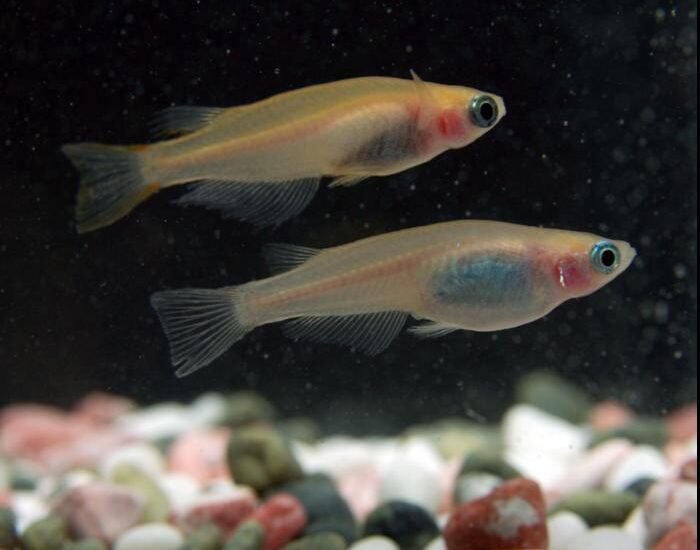
After nearly two decades of research, scientists in Japan have completed the genetic blueprint of the Japanese rice fish, or medaka, filling in the remaining gaps in one of biology’s most important laboratory genomes.
The study, published in Genome Research, reveals previously inaccessible regions of DNA that could deepen scientists’ understanding of chromosome function, sex determination, and the role of mobile genetic elements in evolution.
Although only a few centimetres long, the medaka has become one of the world’s leading model organisms. Researchers use the fish extensively to investigate genetics, embryonic development, disease, and evolution because it breeds easily, develops rapidly, and shares many biological characteristics with other vertebrates, including humans.
The first draft of the medaka genome was produced nearly 20 years ago using Sanger sequencing, the leading DNA sequencing technology at the time. While it successfully decoded most of the fish’s genome, the technique could only read relatively short fragments of DNA, leaving many complex regions unresolved.
Around a decade later, researchers revisited the genome using PacBio Single Molecule Real-Time sequencing, which generated much longer DNA reads and significantly improved the assembly. Even so, approximately 1,000 gaps remained.
Most of these missing sections were concentrated in regions rich in highly repetitive DNA, where identical sequences occur over and over again. Such regions have long challenged genome scientists because repeated patterns make it difficult to determine the correct order and location of DNA fragments.
“We set out to complete the genome sequence of the medaka fish, which previously contained about 1,000 gaps, and to uncover important biological information hidden in those gaps, including insights into chromosome stability, mobile DNA and sex determination,” said Yoshihiko Suzuki of the Research Organization of Information and Systems (ROIS), who led the study.
To overcome these obstacles, the research team combined two advanced DNA sequencing technologies. One generated highly accurate long DNA reads, while the other produced ultra-long reads capable of spanning even the most repetitive sections of the genome.
Using this approach, the researchers completed the genome of one Japanese medaka strain and produced nearly complete genome assemblies for two additional strains; another from Japan and one from Korea.
The finished genomes enabled the team to analyse regions that had previously remained largely inaccessible.
Among the most significant were centromeres; the chromosome structures responsible for ensuring chromosomes are accurately separated during cell division. Mistakes in this process can produce cells with missing or extra chromosomes, contributing to numerous genetic disorders.
The researchers found that repetitive DNA sequences within medaka centromeres are remarkably similar across different strains. This contrasts with many other plants and animals, where these sequences evolve rapidly. The team believes this stability may help proteins attach more reliably to chromosomes during cell division, reducing the risk of genetic errors.
The study also provides new insight into an unusual mobile genetic element known as Teratorn.
Unlike most mobile DNA, Teratorn combines the complete genome of a herpesvirus with a transposable element—a segment of DNA capable of moving to different locations within the genome. Previous studies showed that Teratorn can influence fin development by altering the activity of neighbouring genes, and the new genome assembly confirms that this remarkable genetic element has persisted within the medaka genome.
The researchers also examined the fish’s sex chromosomes. Unlike many species in which the Y chromosome gradually loses genes over millions of years, the medaka has retained matching gene pairs on both the X and Y chromosomes, except for a small region found only on the Y chromosome. This suggests that the evolution of sex chromosomes in medaka has followed a different path from that seen in many related species.
“Genomic regions once considered too difficult to decode contain key biological insights into how chromosomes are accurately distributed to new cells, how mobile DNA survives in the genome and how biological sex is determined,” Suzuki said.
Although the study focuses on a small laboratory fish, the researchers believe its implications extend far beyond medaka biology. Many of the difficult-to-sequence DNA regions identified in the fish are also present in other animals, including humans, and have remained poorly understood until recent advances in sequencing technology.
The team now plans to move beyond identifying these newly revealed DNA regions to investigating their biological functions and determining how they influence the development and characteristics of living organisms.
“Our ultimate goal is to use complete genome information to understand how differences in DNA sequences shape traits in vertebrates and eventually to help clarify human genome function,” Suzuki said.