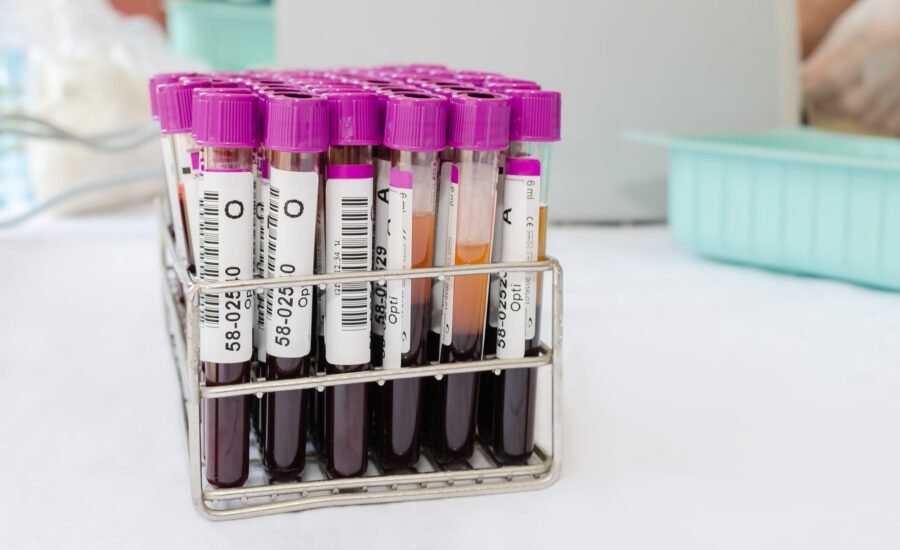
Astrin Biosciences announced the publication of a peer-reviewed study validating its proteome-based liquid biopsy test, Certitude, for the detection of early-stage breast cancer. The study, titled “Development and validation of a machine-learning deep plasma proteome classifier for early stage breast cancer detection,” was published in Breast Cancer: Targets and Therapy.
The research demonstrates that the test, which uses mass spectrometry and machine learning, achieves high accuracy in identifying breast cancer during its earliest stages. While many traditional liquid biopsies rely on DNA-based signals, breast tumors often shed significantly less DNA than other cancer types, leading to lower sensitivity in early detection. Certitude instead profiles the proteome—an approach also being leveraged for other blood-based proteomic tests in oncology—capturing signals from protein crosstalk between cancer, immune, and stromal cells that appear in the blood before a tumor is large enough for imaging.
Validation Performance and Clinical Data
In a validation arm consisting of 397 women, the proteomic approach captured a profile of more than 9,000 proteins to identify cancer-specific signals. The test achieved a sensitivity of 92.6% and a specificity of 92.3%. It also reported a negative predictive value of 99.87%.
According to the study, these results remained consistent across all breast cancer stages (0-IV) and various pathological subtypes, including Invasive Lobular Carcinoma.
“Our proteomic assay demonstrates high sensitivity and specificity in women with breast cancer, especially at early stages,” says Justin Drake, PhD, corresponding author and chief science officer at Astrin Biosciences, in a release. “By reducing false positives more than 10-fold compared to MRIs or contrast enhanced mammograms, Certitude represents a promising path forward as a supplemental screening option that is convenient and accessible.”
Applications for Dense Breast Tissue
The study also evaluated the test’s performance in women with dense breast tissue, which can often obscure abnormalities on traditional mammograms. Certitude detected 93% of breast cancers in women with dense breast tissue across a simulated population. This development joins a wave of technological advancements in breast oncology, including AI-powered breast pathology tools and AI-driven breast cancer prognosis tests designed to improve clinical decision-making.
The researchers also validated a high-throughput pipeline for the test, which is capable of processing hundreds of samples each week.
“Breast cancer screening has relied on the same imaging techniques for decades. The research published today represents a real step forward for women, showing that a proteomic-based blood test can detect earliest signals of breast cancer with high confidence,” says Pooja Advani, MD, medical oncologist and director of the Multidisciplinary Breast Clinic at Mayo Clinic, in a release.
Certitude is intended for use by women who have undergone screening mammography and require further risk stratification. Astrin Biosciences Laboratories is accredited by the College of American Pathologists (CAP) and certified under Clinical Laboratory Improvement Amendments regulations to perform high-complexity clinical laboratory testing.
ID 57049536 © Tinglee1631 | Dreamstime.com