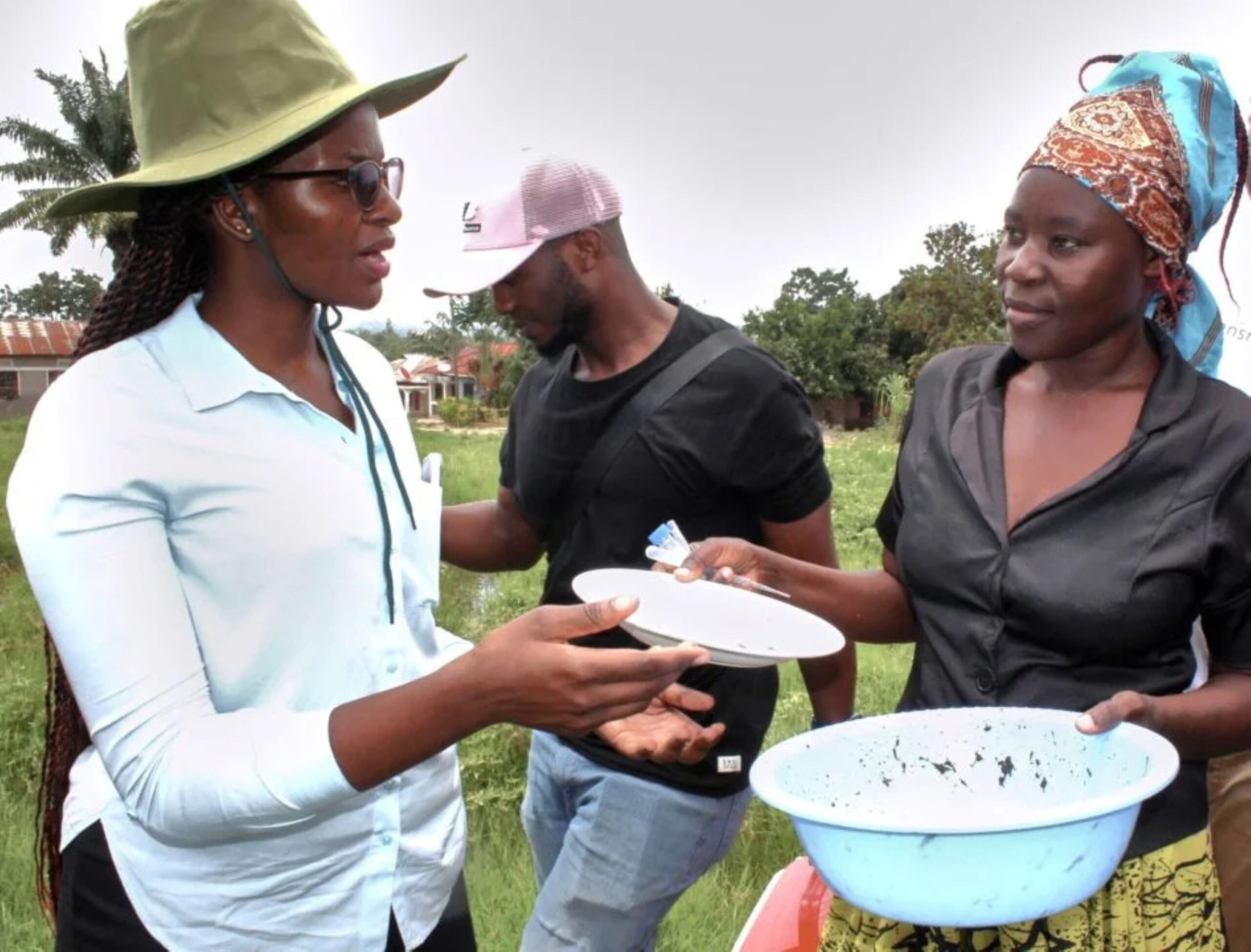
KARAGWE, Tanzania, Jul 24 – Maria Mwijage had barely reached the footpath home from the village well when mosquitoes began circling her legs. Overnight rain had filled roadside puddles and cattle hoofprints with stagnant water, turning them into breeding grounds.
She brushed the insects away, balanced the yellow jerry can on her head and continued towards her home in Nyachika village, in Tanzania’s northwestern Karagwe District.
For families here, the rains bring more than greener fields. They also mark the return of malaria.
“I usually know when it’s malaria before we even get to the hospital,” says Mwijage, 33, who has endured repeated bouts of the disease over the years.
She still remembers the night her 12-year-old son developed a high fever and began shivering uncontrollably.
“He was so weak. He kept crying through the night. None of us could sleep,” she recalls.
The following morning she wrapped him in a blanket and hired a motorcycle taxi for the hour-long ride to Kayanga District Hospital. A rapid diagnostic test confirmed malaria, and health workers prescribed an artemisinin-based combination therapy (ACT), the treatment recommended across most of Africa.
Within days, he had recovered. For now, that remains the experience of most malaria patients across Tanzania. ACTs continue to cure uncomplicated malaria and health authorities are not recommending any changes to treatment. But scientists monitoring the malaria parasite say the organism itself is beginning to change.
A study published in Frontiers in Genetics has detected genetic mutations associated with partial resistance to artemisinin in northwestern Tanzania, raising concerns that the parasite could gradually become less responsive to one of the world’s most effective malaria medicines if its evolution is not closely monitored.
Mystery mutation
Researchers analysed 2,866 Plasmodium falciparum samples collected between 2021 and 2023 in seven districts of Kagera Region. Although the mutation remains uncommon, its wider distribution has caught scientists’ attention.
They found the K13 R561H mutation, recognised by the World Health Organization as a marker of partial artemisinin resistance, remains concentrated in Karagwe and neighbouring Kyerwa District but has also appeared in Muleba and Bukoba Rural, suggesting it is spreading beyond its original hotspot.
“The medicines we use today are still effective,” says Dr Deus Ishengoma, a molecular biologist at the Ifakara Health Institute and one of the study’s authors.
“What this study shows is that the parasite is changing. We are seeing resistance-associated mutations in areas where they were previously uncommon, and that’s an early warning that we need to take seriously.”
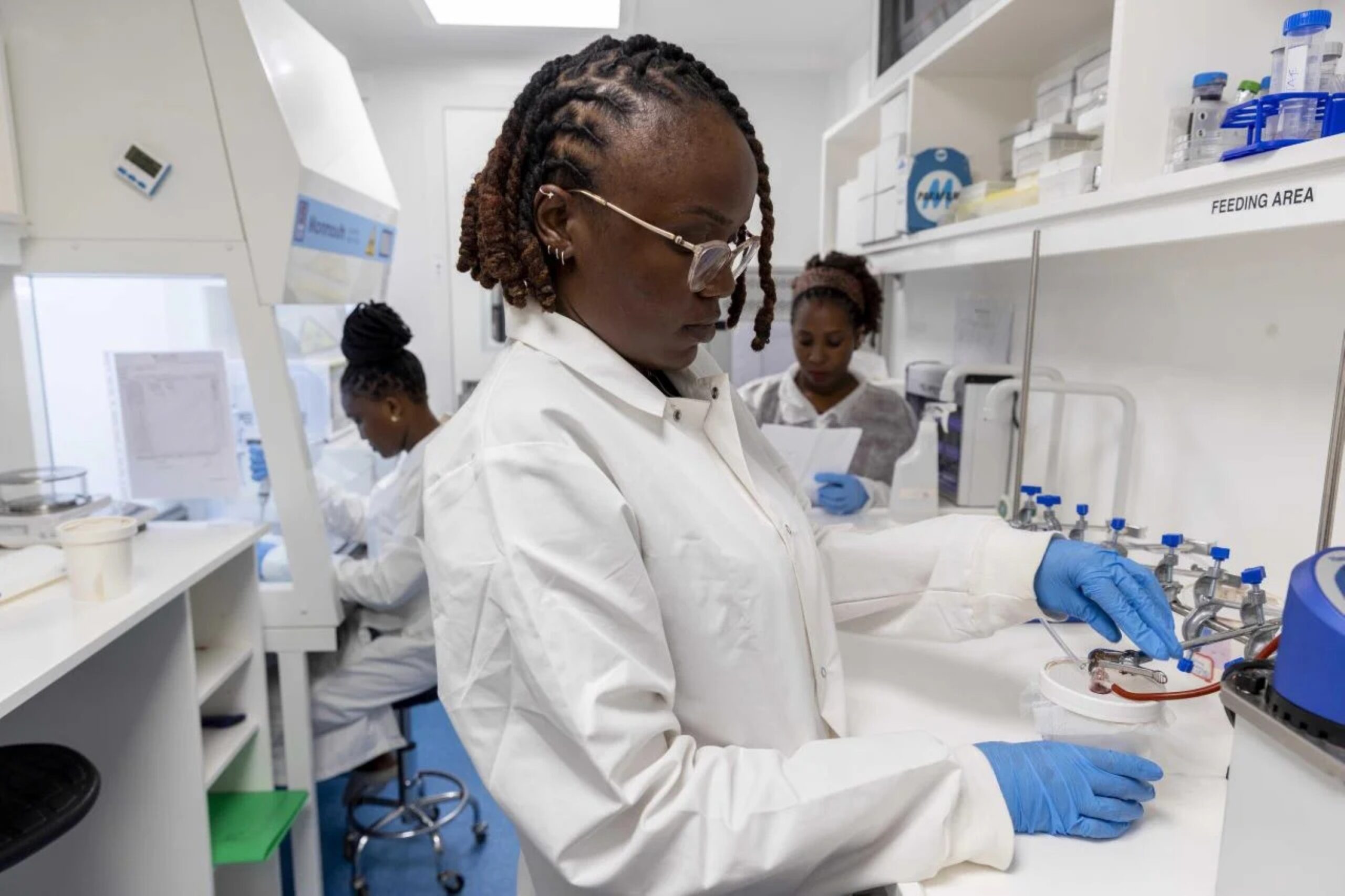
Unlike routine malaria surveillance, which records infections and treatment outcomes, genomic surveillance looks inside the parasite’s DNA, allowing scientists to detect mutations years before patients begin failing treatment. That early warning can give countries time to strengthen surveillance while existing medicines are still working. Researchers point to Southeast Asia as a reminder of why that matters.
Crucial cooperation
More than a decade ago, scientists in western Cambodia detected similar mutations that initially caused parasites to clear more slowly after treatment. Patients still recovered, but resistance eventually spread to the partner medicines used alongside artemisinin, forcing several countries in the Greater Mekong Subregion to replace their first-line malaria treatments.
Africa is not facing that situation. ACTs continue to perform well across the continent, and the Tanzanian study found no evidence that patients are failing treatment. Instead, researchers see the findings as a signal to watch the parasite more closely.
Karagwe’s location adds to the concern. The district borders Rwanda and Uganda, where thousands of people cross every day to trade, visit relatives, farm and seek healthcare. Malaria parasites travel with infected people and mosquitoes, making drug resistance difficult to contain within national borders.
“Cross-border cooperation is essential because malaria does not stop at immigration checkpoints,” says regional malaria expert Zul Premji. “If one country detects resistance-associated mutations but neighbouring countries are not looking for the same markers, resistant parasites can spread unnoticed. Sharing surveillance data gives countries the best chance of detecting changes early and protecting the medicines we still have.”
Scientists say neighbouring countries around the Lake Victoria basin should not only exchange malaria case data but also compare genetic information and coordinate therapeutic efficacy studies so changes in parasite populations can be tracked consistently across the region.
Over the past two decades, governments and donors have invested heavily in mosquito nets, indoor spraying, rapid diagnostic tests and ACTs, helping reduce malaria deaths across much of sub-Saharan Africa.
Far less money has gone into genomic surveillance—the specialised laboratories, sequencing technology and trained personnel needed to detect resistance before medicines begin to fail.
“Changing first-line malaria treatment is a major undertaking,” says Syabo Mwaisengela, a health economics and policy expert at Mzumbe University. “It means revising national treatment guidelines, retraining health workers, procuring new medicines and reorganising supply chains. Those changes are expensive. Detecting resistance early allows countries to respond before treatment failure becomes widespread.”
The researchers stress that Tanzania’s current malaria treatment policy remains appropriate. ACTs continue to cure uncomplicated malaria, and the study found no evidence that the medicines are losing their effectiveness.
Beyond the K13 mutation, scientists also detected genetic markers linked to resistance against older antimalarial drugs, including sulfadoxine-pyrimethamine, offering a broader picture of how Plasmodium falciparum is evolving across northwestern Tanzania.
For Mwijage, those scientific findings feel distant from everyday life. When her son became ill, she was not thinking about parasite genetics or molecular surveillance. She wanted the nearest hospital to have medicine that would make him well. It did. Scientists hope it stays that way.
They say identifying resistance-associated mutations while they remain uncommon gives Tanzania and its neighbours a chance to strengthen surveillance, expand laboratory capacity and coordinate monitoring across borders before one of Africa’s most effective malaria treatments comes under threat.
Combat the infodemic in health information and support health policy reporting from the global South. Our growing network of journalists in Africa, Asia, Geneva and New York connect the dots between regional realities and the big global debates, with evidence-based, open access news and analysis. To make a personal or organisational contribution click here.