3 min readNew DelhiAug 3, 2026 09:00 PM IST
Many people worry about meeting their daily protein needs. So, how can one hit 90 grams a day without eggs or meat? Dt Amreen Sheikh, chief dietitian, KIMS Hospitals, Thane, said it is definitely possible — all you need to do is some careful meal planning. “Many people mistakenly believe that protein only comes from animal sources. However, a balanced vegetarian diet can easily fulfil protein needs by mixing different dairy products, soy foods, pulses, legumes, whole grains, nuts, and seeds throughout the day,” said Sheikh.
DISCLAIMER: This article is based on information from the public domain and/or the experts we spoke to. Always consult your health practitioner before starting any routine.

Rather than trying to consume a large amount of protein in one meal, distribute it across breakfast, lunch, dinner, and one or two healthy snacks. “This approach not only improves protein absorption but also helps you feel full longer, supports muscle recovery, and keeps energy levels steady,” said Sheikh.
For breakfast, you might have paneer, Greek yoghurt, or milk along with roasted chana or peanut butter on whole-grain toast. “Lunch could feature dal, rajma, chole, or sprouts with whole grains like roti or brown rice. For dinner, options such as tofu, paneer, or soy chunks paired with vegetables and millet or chapati work well. Snacks like roasted soy nuts, unsweetened yogurt, buttermilk, mixed seeds, or roasted chana can easily help fill any remaining protein needs,” said Sheikh.
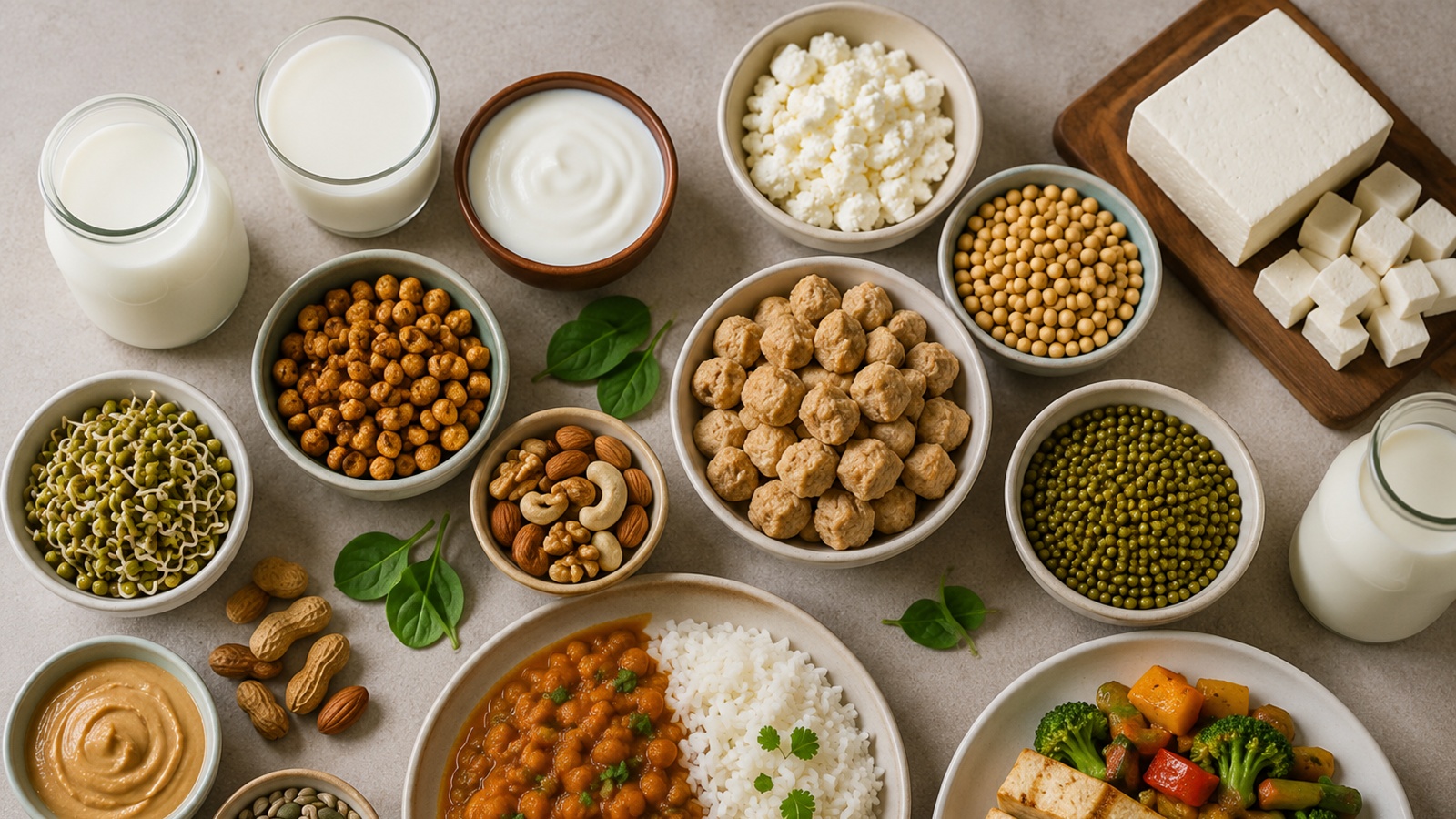 These are popular vegetarian sources of protein (Photo: AI Generated)
Soy products are particularly noteworthy because they are among the few plant-based sources that offer high-quality protein with all the essential amino acids. “Dairy products such as milk, curd, paneer, and Greek yoghurt also make excellent choices, especially for vegetarians,” said Sheikh.
A practical protein target could include two glasses of milk (around 16 grams), 100 grams of paneer (18–20 grams), one cup of Greek yogurt (15–18 grams), one cup of cooked dal (8–10 grams), one serving of soy chunks (20–25 grams), and a handful of roasted chana or nuts (6–8 grams). Altogether, these can easily help you reach about 90 grams of protein in a day.
It’s also important to remember that protein needs can vary based on age, body weight, activity level, and health status. “Pursuing a specific number just because it’s popular on social media isn’t always the best approach. Instead, aim to include a good source of protein in each meal. If you have kidney disease, liver disease, or other health issues, consult a qualified dietitian before making significant changes to your diet,” said Sheikh.
Story continues below this ad
DISCLAIMER: This article is based on information from the public domain and/or the experts we spoke to. Always consult your health practitioner before starting any routine.